30+ Amazing Facts About the Incas and Their Lost Empire
Facts About the Incas
Among all ancient civilizations, few have captured the imagination quite like the Inca civilization. Built high in the Andes Mountains of South America, their empire stretched across modern-day Peru, Bolivia, Ecuador, and beyond. Interestingly, many facts about the Incas continue to astonish historians even today. Their vast empire thrived without a written language, wheel, or iron tools, yet their engineering, agriculture, and road systems rivaled those of the mighty Roman Empire.
Moreover, the Inca people possessed a profound connection to the natural world, honoring Mother Earth, the Sun God Inti, and sacred sites such as Machu Picchu. As we explore deeper, these facts about the Incas reveal an empire that was as spiritual as it was sophisticated.
Featured Snippet Summary:
The Inca civilization built one of the largest empires in South America, known for Machu Picchu, advanced agriculture, and a vast road network. Discover fascinating facts about the Incas, their religion, rulers, and innovations that shaped human history and inspired the modern Andean world.
Origins and Rise of the Inca Civilization
A Civilization Born in the Andes Mountains
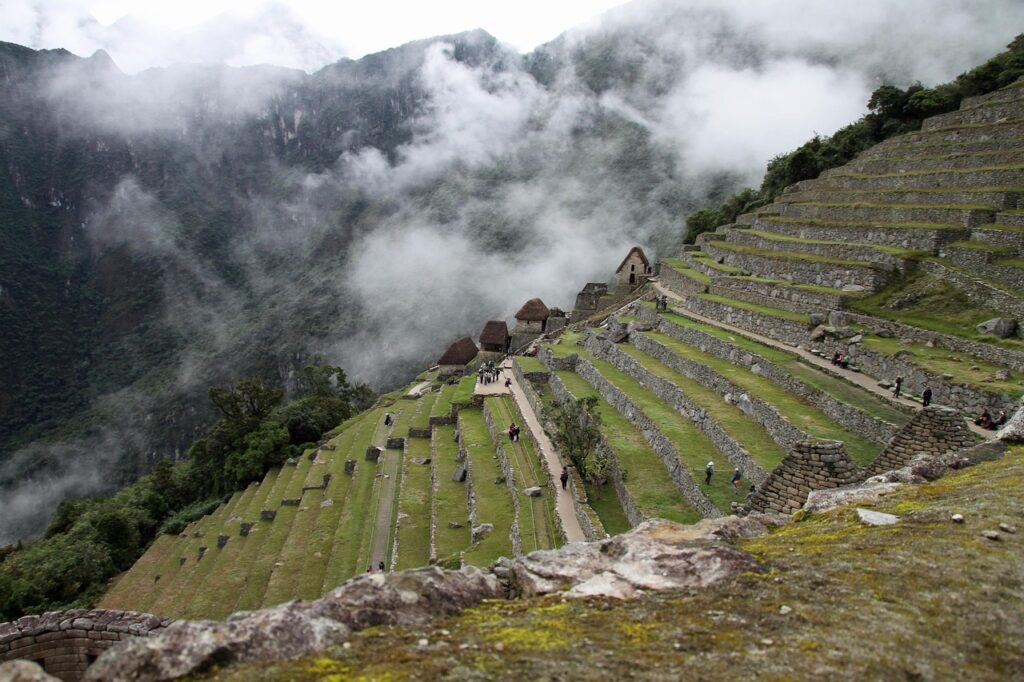
The Inca civilization began its journey in the rugged Andean region during the early 13th century. Situated in high-altitude areas, the Inca people learned to adapt to the harsh natural environment, developing advanced agricultural techniques that prevented soil erosion on steep slopes.
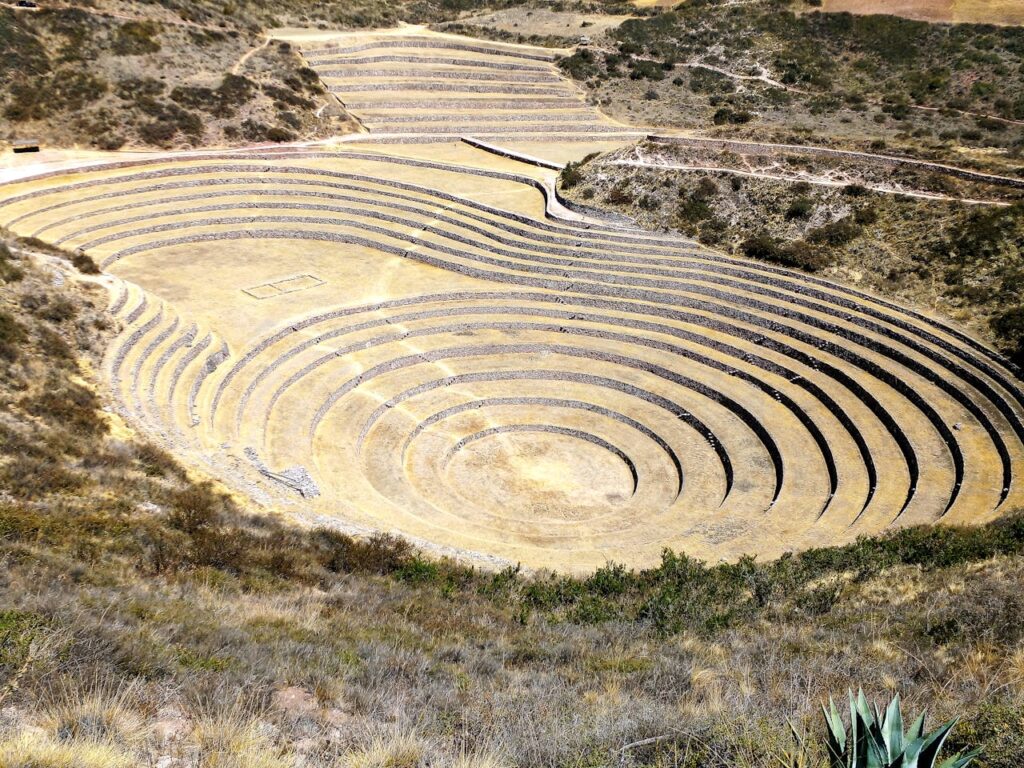
They used agricultural terraces carved into mountain sides, allowing crops like potatoes and maize to flourish at lower altitudes.
Furthermore, the city of Cusco, which later became the capital of the Inca Empire, was built as the center of political and spiritual life.
According to ancient Inca legends, the empire’s founders, Manco Cápac and Mama Ocllo, were sent by the Sun God Inti to bring civilization to humankind.
The Expansion of a Vast Empire
At its height in the 15th century, the Incan Empire became the largest pre-Columbian empire in the Americas. Stretching across thousands of miles of roads and fertile valleys. Consequently, the empire controlled diverse climates, from snow-capped mountains to flat areas near sea level.
The Sapa Inca, the supreme ruler, held absolute power over the entire empire and was considered a living descendant of Inti.
Additionally, a highly organized social structure ensured that agricultural work, construction, and religious ceremonies were coordinated across long distances.
The road network—one of the most extensive in human history—connected all corners of the empire, allowing communication between various communities who spoke different languages such as Quechua, the official language.
Inca Engineering and Achievements
Machu Picchu: The Lost City of the Incas
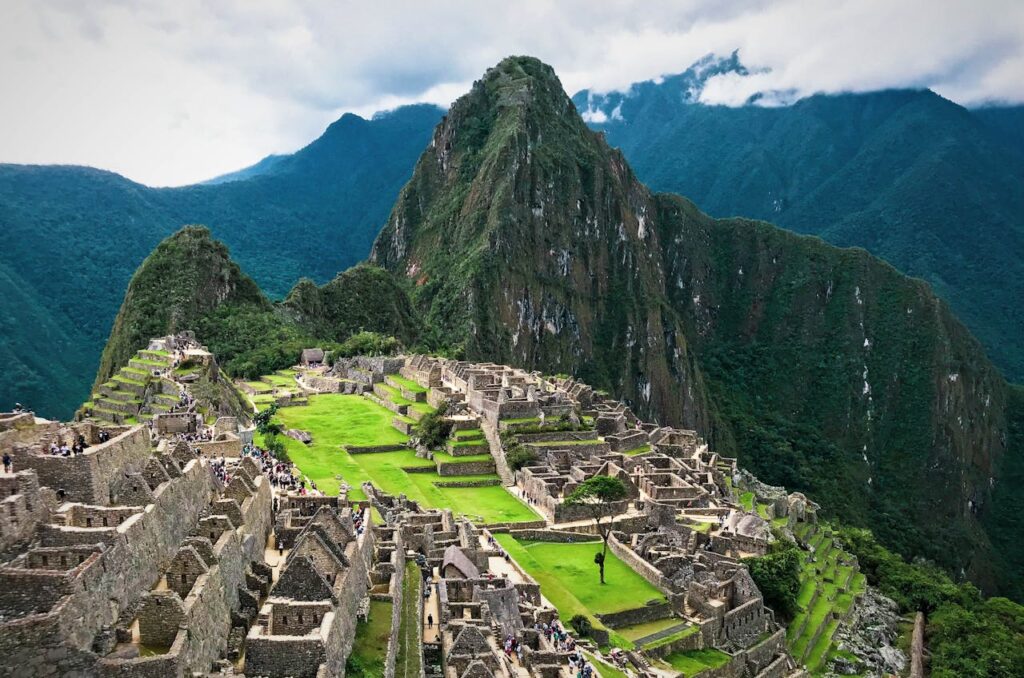
Perhaps one of the most recognized facts about the Incas is the mysterious city of Machu Picchu. Built without the use of mortar, this sacred site stands as a testament to the Inca’s architectural genius.
Despite its construction on steep slopes, the structures have survived centuries of natural disasters, remaining largely intact.
According to UNESCO, Machu Picchu was declared a World Heritage Site in 1983, and it continues to attract millions of travelers who embark on the Legendary Inca Trail Trek to witness its beauty firsthand.
Moreover, Machu Picchu’s precise stonework and alignment with celestial events reflect the Incas’ deep understanding of astronomy and their devotion to religious practices connected to the Sun.
(Source: UNESCO World Heritage Centre)
Religion and Spiritual Beliefs of the Inca People
The Power of the Sun God Inti and Mother Earth
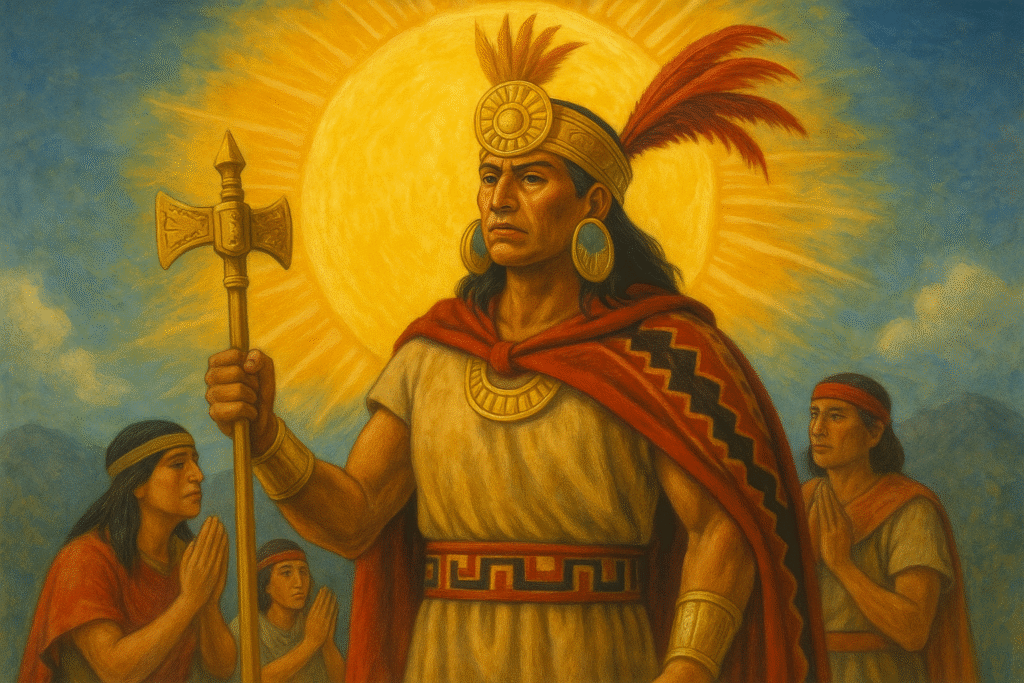
Above all, religion played a central role in every aspect of Inca life. The Inca people believed their rulers were direct descendants of the Sun God Inti, who was the most important deity in Inca religion.
Furthermore, Mother Earth or Pachamama was deeply revered as the giver of life and fertility. For religious purposes, offerings of food, textiles, and animals were made to honor these divine figures.
Interestingly, facts about the Incas show that their religious beliefs were closely tied to the natural world. Mountains, rivers, and even stones were thought to hold spiritual energy.
Consequently, sacred sites like the Sacred Valley of the Incas and Lake Titicaca became important centers for religious ceremonies and festivals.
Religious Ceremonies and Human Sacrifices
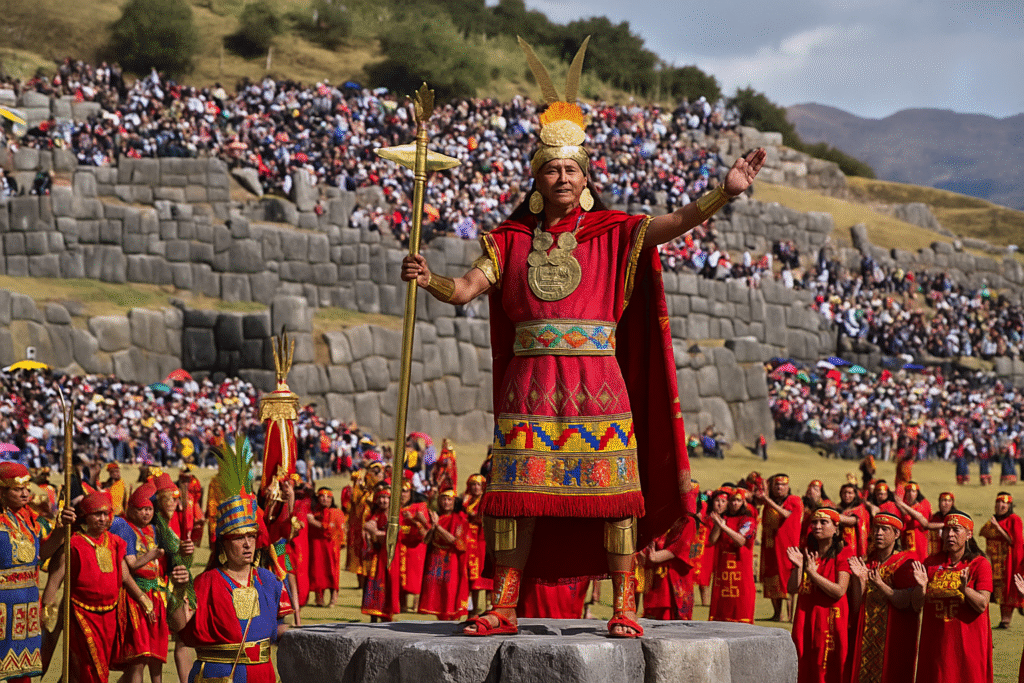
During special occasions such as the Inti Raymi, or the Festival of the Sun, massive celebrations were held in Cusco, the capital of the Inca Empire.
Thousands of participants gathered to perform dances, songs, and rituals to please the gods and ensure good harvests.
Although their religious practices were often symbolic, evidence indicates that human sacrifices were sometimes carried out to appease deities during hard times like droughts or natural disasters.
However, these sacrifices were rare and viewed as sacred acts of devotion rather than violence.
Moreover, priests oversaw complex ceremonies involving the use of chicha (a maize-based drink), music, and colorful textiles, reflecting the sophistication and depth of Inca religion.
Daily Life and Social Structure
Roles and Responsibilities of the Inca People
Daily life within the Incan Empire was highly structured. The population was divided into classes, with nobles, artisans, farmers, and servants each performing distinct roles.
Additionally, the Sapa Inca was regarded as divine, ruling over everyone with the help of trusted officials and governors who ensured the smooth running of the vast empire.
Moreover, most Inca people lived simple lives centered around agricultural work. They grew crops such as maize, potatoes, and quinoa using advanced agricultural techniques and sophisticated irrigation systems that brought water from mountain springs to fields below.
In addition, pack animals like llamas and alpacas were used to transport goods across long distances and steep terrains.
Food and Festivals
Traditionally, Inca families prepared their own food using what they harvested. Guinea pig, maize, and potatoes were staple ingredients, often cooked in clay pots or roasted on open fires. During religious festivals, special dishes were prepared to honor the gods and share among the community.
Meanwhile, communal feasts and dances were common during special occasions, strengthening social bonds and reinforcing a sense of unity among the Quechua people.
Inca Engineering and Infrastructure
A Masterpiece of Ancient Civilizations
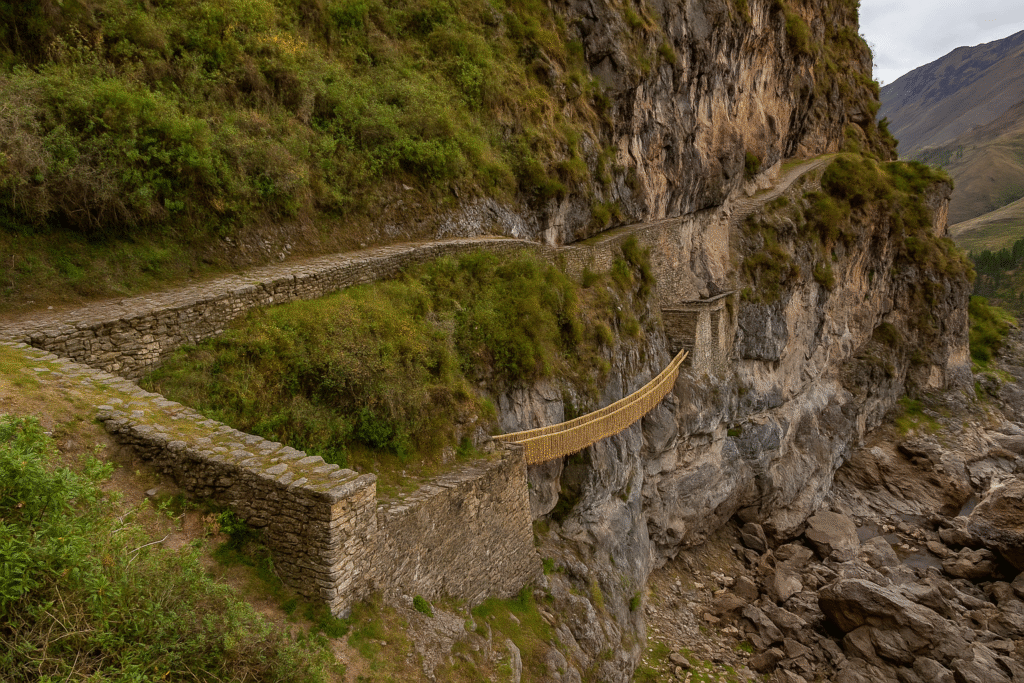
Among the most fascinating facts about the Incas is their mastery of engineering. Without iron tools or a written language, they built thousands of miles of roads and suspension bridges connecting even the most remote regions of the Andes Mountains.
Consequently, the Inca road system allowed for the efficient movement of armies, goods, and information across the largest empire in pre-Columbian America.
In addition, rope bridges made of woven grass stretched across deep gorges, while stone roads traversed rugged landscapes with astonishing precision. These achievements demonstrated not only technical skill but also an exceptional understanding of their natural environment.
Communication and Record-Keeping in the Incan Empire
A Civilization Without a Written Language
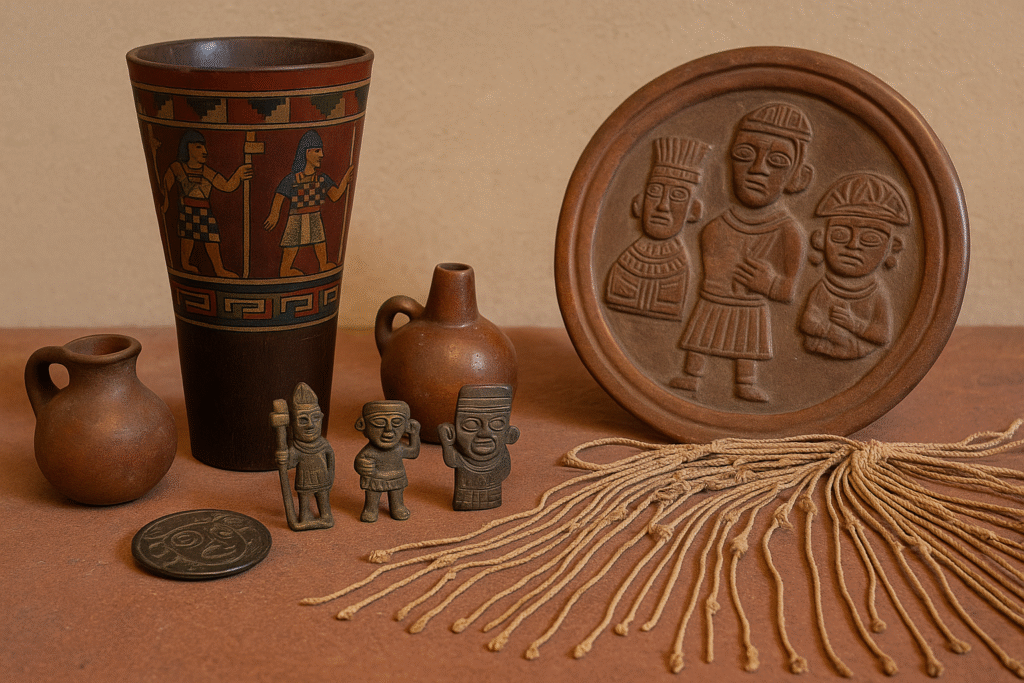
Curiously, one of the most surprising facts about the Incas is that they had no written language. Instead, they developed a unique system known as quipu — a series of knotted strings used for recording information such as census data, taxes, and agricultural production.
Through careful observation, historians have determined that the color, type of knot, and its placement conveyed numerical and possibly symbolic meaning.
Furthermore, communication across the vast empire was carried out through a network of relay runners known as chasquis.
They ran across the Inca road network, passing messages and small items between stations spaced several miles apart. Consequently, this system allowed information to travel hundreds of miles in just a few days — a remarkable feat for a society without wheels or writing.
Oral Tradition and Storytelling
Additionally, oral tradition was vital for preserving history, myths, and religious beliefs. Stories about the creation of the world, heroic Inca rulers, and the founding of Cusco were passed down through generations. Most importantly, storytellers known as amautas served as both educators and guardians of cultural memory.
Through these oral narratives, facts about the Incas and their legendary ancestors, like Manco Cápac and Mama Ocllo, were immortalized. These tales played a crucial role in maintaining unity across diverse regions that spoke different languages.
The Inca Economy and Agricultural Practices
Advanced Agricultural Techniques and Terraces
Among the most impressive facts about the Incas is their sophisticated approach to agriculture. Despite living in one of the world’s most challenging environments, they turned steep mountains into productive farmlands. Agricultural terraces built along the slopes of the Andes Mountains prevented soil erosion and made irrigation easier.
Moreover, irrigation systems carried meltwater from snow-capped mountains to fertile valleys at lower altitudes. As a result, crops such as maize, potatoes, quinoa, and coca leaves thrived in regions that would otherwise have been barren.
In addition, the Incas practiced crop rotation to preserve soil fertility — an approach centuries ahead of its time. Because of this innovation, the empire could sustain millions of people across vast and diverse landscapes.
Trade, Labor, and Shared Prosperity
Instead of using money, the Inca economy was based on reciprocity and collective labor. Citizens contributed to state projects through a system called mit’a, which required each person to work for the empire in exchange for protection, food, and housing.
Additionally, goods such as textiles, ceramics, and agricultural produce were distributed according to need rather than wealth. This system of social cooperation ensured stability even during hard times.
Therefore, facts about the Incas reveal a civilization where equality and shared responsibility shaped daily life. Unlike other ancient civilizations, wealth accumulation was discouraged, and success was measured by service to the entire empire.
Spanish Conquest and the Fall of the Inca Empire
The Arrival of Francisco Pizarro and the Spanish Conquistadors
Tragically, the fall of the Inca Empire began with the arrival of the Spanish conquistadors led by Francisco Pizarro in the early 16th century.
At that time, a devastating civil war between two Inca rulers, Atahualpa and Huáscar, had weakened the empire. Consequently, the Spanish easily exploited internal divisions.
When Pizarro met Atahualpa near Cajamarca in 1532, he ambushed and captured the Sapa Inca, demanding an enormous ransom of gold and silver. However, even after the ransom was paid, Atahualpa was executed, marking the beginning of the Spanish conquest.
Moreover, diseases brought from Europe decimated the native population, and resistance against colonial forces eventually collapsed. By 1572, the once-mighty Incan Empire had fallen completely under Spanish control.
Cultural Legacy and Rediscovery of the Lost City
Machu Picchu: A Window Into Ancient Inca Life
Centuries after the Spanish conquest, the Lost City of the Incas remained hidden from the world, preserved high in the Andes Mountains.
Astonishingly, it wasn’t until 1911 that Machu Picchu was rediscovered by the American explorer Hiram Bingham. Since then, it has been recognized as one of the most iconic archaeological sites in human history.
Moreover, this sacred site provides scholars with invaluable insight into daily life during Inca times. Carefully constructed agricultural terraces, temples, and residential areas reveal a civilization that valued harmony between humans and the natural environment.
As one of the most famous UNESCO World Heritage Sites, Machu Picchu continues to stand as a symbol of Inca ingenuity, spirituality, and resilience.
Consequently, visiting the Sacred Valley of the Incas or trekking the legendary Inca Trail remains a spiritual journey for many modern travelers, allowing them to connect with the rich history of this remarkable ancient civilization.
Preservation and Global Recognition
In modern times, efforts have been made to protect and preserve the ruins of the Incan Empire from environmental threats and mass tourism.
Conservationists work tirelessly to prevent soil erosion and damage caused by heavy foot traffic along the Inca Trail Trek.
Furthermore, educational programs in modern-day Peru and across South America aim to keep the Quechua language and traditions alive. Through music, dance, and festivals, descendants of the Inca people continue to celebrate their ancestors’ achievements and religious practices.
Fun and Fascinating Facts About the Incas
Incredible Facts That Continue to Amaze
Among the most fascinating facts about the Incas is their ability to construct enormous cities and road systems without the use of iron tools, wheels, or use of mortar.
Each stone in their structures was precisely cut to fit together perfectly — a feat still admired by engineers today.
In addition, the Inca road system stretched over 25,000 miles, crossing mountains, deserts, and valleys. Because of this vast network, the empire maintained efficient communication and transport — even across long distances and high altitudes.
Another remarkable fact involves their diet. Guinea pig was not only a common food source but also played an important role in religious ceremonies.
Meanwhile, pack animals like llamas carried crops and supplies across the empire, helping sustain trade between regions.
Moreover, facts about the Incas reveal that their empire, at its height, was larger than the Roman Empire in terms of area covered within its continent.
The capital of the Inca Empire, Cusco, stood at the highest point of Andean civilization, showcasing breathtaking architectural designs that reflected both spiritual and practical values.
Religious Festivals and Cultural Pride
Every year, the Inti Raymi festival is celebrated in Cusco to honor the Sun God Inti. Thousands of people dress in traditional clothing, reenacting ancient rituals performed by the Inca rulers.
Consequently, this festival remains one of the most important cultural events in South America, symbolizing the enduring pride and unity of the Quechua people.
Additionally, facts about the Incas show that despite centuries of colonization and cultural suppression, the Incan legacy continues to inspire millions around the world.
Their respect for Mother Earth, mastery of agriculture, and spiritual connection to the natural world serve as reminders of humanity’s potential for balance and innovation.
Technological Innovations and Comparison With Other Civilizations
Engineering Genius of the Inca People
Truly, the facts about the Incas highlight an extraordinary civilization that thrived through innovation and adaptability. Their road network, agricultural terraces, and suspension bridges were marvels of ancient engineering.
Despite lacking metal tools and the wheel, they constructed cities that could withstand natural disasters such as earthquakes and landslides.
Moreover, their irrigation systems distributed water evenly across mountainous terrain, ensuring sustainable farming even in the most steep slopes.
In fact, when compared to the Roman Empire, historians often regard the Inca’s achievements as equally advanced — especially considering the environmental challenges they faced.
Additionally, the Incas’ expertise extended to astronomy and architecture. Temples like the Temple of the Sun in Cusco were aligned perfectly with celestial events. Reflecting their deep understanding of the cosmos.
Consequently, these aspects of Inca culture reveal not only technical skill but also a spiritual appreciation for balance and harmony.
Lasting Influence of the Inca Civilization
The Incan Legacy in Modern South America
Even today, facts about the Incas continue to influence modern-day Peru and neighboring countries.
Elements of Inca religion, language, and agriculture remain alive through the traditions of the Quechua people. Furthermore, the Inca calendar, agricultural methods, and community-based economy inspire sustainable practices across the Andean region.
Because of this, the Incas are regarded as pioneers of environmental harmony — a principle increasingly valued in contemporary society. Their agricultural terraces and advanced irrigation systems are still studied by scientists seeking eco-friendly solutions to soil erosion and food scarcity.
Additionally, cities like Cusco and the Sacred Valley of the Incas attract millions of tourists each year.
Travelers embark on the Inca Trail Trek not only for its breathtaking views but also for the spiritual connection to Mother Earth. These journeys foster appreciation for one of the largest empires in human history — one that rose and fell but never truly disappeared.
If you have some free time, you might find this article 54 Fascinating Facts About the Mayans That Will Amaze You well worth a read, it may expand your knowledge of ancient South American civilizations.
Facts About the Incas: Frequently Asked Questions (FAQs)
How did the Inca civilization end?
The fall of the Inca Empire followed the Spanish conquest led by Francisco Pizarro in the 16th century.
What was daily life like for the Inca people?
Daily life revolved around agricultural work, family duties, and religious ceremonies. Each person contributed labor to support the entire empire.
What were the Incas most famous for?
They were known for their advanced agricultural techniques, road systems, and architectural wonders like Machu Picchu.
Did the Incas have a written language?
No, they did not have a traditional writing system. Instead, they used quipu, a method of recording information with knots on strings.
Why is Machu Picchu important?
Machu Picchu represents the ingenuity and spirituality of the Inca civilization and remains one of the most fascinating facts about the Incas today.
What were Inca religious practices like?
Their religious practices included offerings, music, and sometimes human sacrifices for religious purposes during festivals such as Inti Raymi.
Snippet Section: Quick Facts About the Incas
- Origin: The Inca civilization began in the early 13th century in the Andes Mountains.
- Language: The official language was Quechua.
- Capital: The city of Cusco served as the capital of the Inca Empire.
- Religion: The Sun God Inti and Mother Earth were the main deities.
- Engineering: They built 25,000 miles of roads and suspension bridges without wheels or iron.
- Famous Site: Machu Picchu, discovered in 1911, is a UNESCO World Heritage Site.
- Downfall: The fall of the Inca Empire occurred after the Spanish conquest led by Francisco Pizarro
Facts About the Incas Conclusion
Ultimately, the countless facts about the Incas reveal a civilization defined by intelligence, resilience, and reverence for nature.
Though centuries have passed since their fall, the Incas’ influence continues to shape South America’s identity and inspire respect for the natural world.
Their achievements — from Machu Picchu to their agricultural terraces — demonstrate how a people without modern tools created one of the largest empires in ancient history.
Consequently, studying these facts about the Incas not only connects us to the past but also reminds us of humanity’s capacity for innovation, unity, and respect for Mother Earth.
You’ll love this article 50+ Fascinating Facts About Cinco de Mayo You Didn’t Know