25 Amazing Facts About Abigail Adams: The Best Guide
Facts About Abigail Adams
Among the most remarkable women in early American history, Abigail Adams stands as a beacon of intellect, strength, and influence. Often remembered as the wife of John Adams, the second President of the United States, she was far more than a political spouse. Indeed, her life offers a treasure trove of insight into the birth of a nation, the American Revolution, and the evolution of women’s rights. In exploring these facts about Abigail Adams, we uncover how her keen intellect, unwavering values, and bold correspondence helped shape America’s social and political identity.
Moreover, these facts about Abigail Adams demonstrate her as one of the most well-read women of her era. A figure whose advocacy for equal education and property rights for women preceded her time. Through her letters, she voiced revolutionary ideas that questioned such unlimited power in the hands of the husbands. Calling instead for a new code of laws that would grant equal rights to women.
Early Life and Family Background
Abigail’s Birth and Family Lineage
Abigail Smith Adams was born on November 11, 1744, in Weymouth, Massachusetts. Her father, Reverend William Smith, was a respected Congregationalist minister. While her mother, Elizabeth Quincy Smith, came from a distinguished family with deep roots in colonial society. As one of the lesser-known facts about Abigail Adams, her family home was a hub for political discussions and religious study. Laying the foundation for her future engagement with political matters.
Furthermore, she grew up alongside her younger sister, Mary, and several other family members who encouraged her curiosity and strong moral values. Although denied formal education, Abigail received extensive learning at home. Under her father’s guidance, she read widely in philosophy, history, and theology — a rare privilege for a young woman of her time.
Influence of Early American Events
During her early years, Abigail witnessed the growing tension between the American colonies and Great Britain. The Boston Massacre, the Boston Tea Party, and the Battle of Bunker Hill were not distant tales — they were local events that deeply affected her community and family. These experiences became central facts about Abigail Adams, shaping her views on independence, justice, and governance.
Significantly, the Adams family’s home often hosted political leaders, including Samuel Adams, Benjamin Franklin, and Thomas Jefferson, who debated revolutionary ideas that would soon alter the course of history. Abigail absorbed every discussion, developing strong opinions on freedom, governance, and morality.
Marriage to John Adams: A Partnership of Minds
A Union Built on Intellect and Mutual Respect
In 1764, Abigail Smith married John Adams, a rising lawyer from Braintree, Massachusetts. Their marriage was not one of mere convenience but of deep intellectual connection. As one explores facts about Abigail Adams, it becomes evident that she and her husband shared a rare partnership grounded in respect, intellect, and shared values.
Their marriage spanned over five decades and produced six children, including John Quincy Adams, who would later become the sixth President of the United States. Abigail’s role as both wife and mother of John Quincy Adams further illustrates her lasting influence on America’s political lineage.
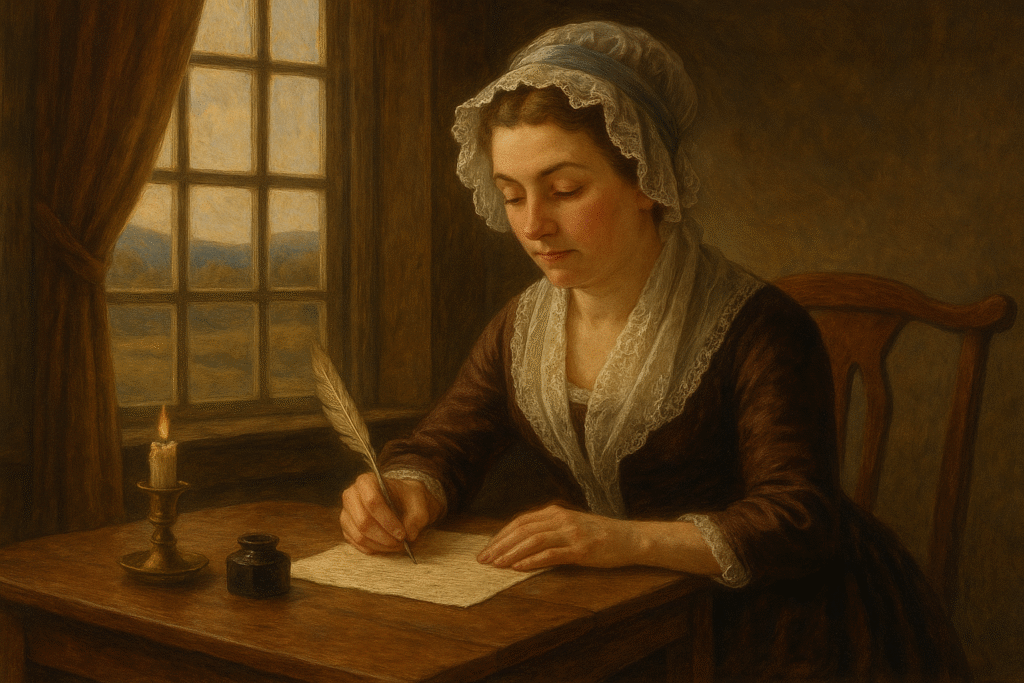
Moreover, her letters to husband John Adams during the Revolutionary War reveal her sharp political insight. In one famous letter, she urged him to “Remember the Ladies,” warning that such unlimited power in the hands of men could lead to tyranny. This line became a cornerstone in early advocacy for women’s rights and female education.
Abigail’s Role in the American Revolution
While John was away serving as a member of the Continental Congress, Abigail managed the family farm in Quincy. She supervised laborers, cared for their children, and handled financial decisions — all while corresponding with her husband about political matters and foreign influence. These letters, preserved by the Massachusetts Historical Society, form an essential part of her legacy and provide firsthand facts about Abigail Adams and her influence during the American Revolution.
Consequently, Abigail’s ability to balance domestic duties with political engagement made her one of the first American women to bridge the gap between private life and public life. Her leadership at home during times of war and uncertainty symbolized the resilience of early American women.
✅ Source Fact:
According to the National Park Service, over 1,100 of Abigail’s letters survive today, revealing her deep involvement in political discussions and family affairs. (Source: National Park Service – Adams National Historical Park)
Abigail Adams and the Birth of a Nation
A Voice in the Shadows of Power
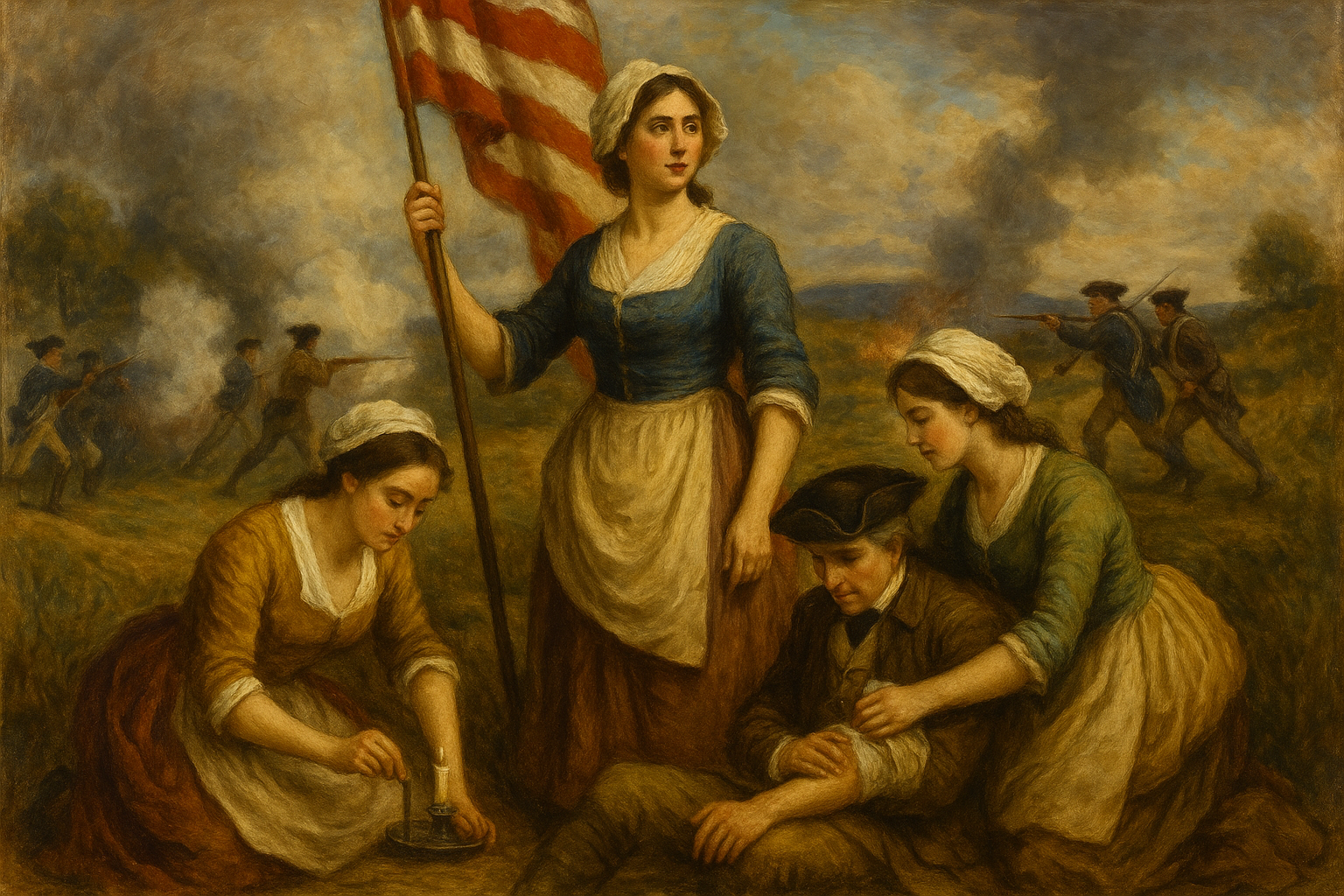
As the struggle for independence intensified, Abigail Adams became one of the most trusted confidantes of her husband. Through her extensive correspondence, she offered counsel and moral support during the critical years surrounding the First Continental Congress and the Declaration of Independence. When John Adams joined Thomas Jefferson, Benjamin Franklin, and others in drafting the Declaration of Independence, Abigail’s influence could still be felt through her letters — she questioned the nation’s foundation of liberty that excluded women from its promises.
Indeed, among the many facts about Abigail Adams, one stands out prominently: she was one of the first voices in American history to insist that the principles of freedom and equality should extend to women as well. Her plea to “Remember the Ladies” was not merely a domestic appeal but a revolutionary statement. Through her words, she reminded her husband that equal rights must be part of the new code of laws forming the republic.
Life During the Revolutionary War
Throughout the Revolutionary War, Abigail Adams managed the family farm and ensured that her household survived in the absence of John Adams. Who was serving as a member of the Continental Congress. Her letters captured the harsh realities faced by women — shortages of supplies, inflation, and the ever-present fear of attack by British soldiers.
Meanwhile, her words reveal compassion and resolve. She spun her own cloth, raised their children, and handled finances. While discussing political matters with clarity that impressed even her husband. Many historians note that her writings during this period serve as an emotional record of early American resilience. These facts about Abigail Adams highlight her as not only a patriot but also a mother who bore the emotional burden of war.
Abigail Adams in Diplomatic Circles
Journey to Europe
In 1784, Abigail Adams and her daughter Nabby joined John Adams in Europe. Where he was serving diplomatic missions in France and later at the Court of St. James in Great Britain. This phase of her life offers some of the most captivating facts about Abigail Adams.
Although she was initially hesitant to cross the Atlantic — fearing storms, illness, and isolation — she adapted quickly to foreign customs. As Mrs. Adams, she observed the contrast between European opulence and American modesty. Interestingly, she maintained close contact with Thomas Jefferson, who was then the American envoy to France. Their mutual friendship was genuine, though later strained due to political disagreements between Jefferson and President Adams.
Observations Abroad
Abigail’s letters from London and Paris reflected her sharp intellect and cultural awareness. She wrote about foreign influence, the education of European women, and the responsibilities of citizens in a free society. Her experiences abroad further reinforced her belief in equal education for women.
Furthermore, she compared the grandeur of royal courts with the struggles of the American people, emphasizing virtue over luxury. Through these reflections, she became a moral compass for her husband and, in many ways, for the nation he represented.
First Lady of the United States
A New Chapter in Public Life
When John Adams became the second President of the United States in 1797, Abigail Adams stepped into her role as First Lady with grace and determination. Living in New York City and later in the White House, she continued to voice her opinions on political matters, the Sedition Acts, and the dangers of foreign influence on the young republic.
While many viewed her as Mrs. President, a nickname she earned for her assertive guidance, her influence was subtle yet profound. As one studies deeper facts about Abigail Adams, her correspondence with her husband reveals how her advice shaped several of his decisions. Her letters urged caution, fairness, and devotion to democratic principles.
Life in the White House
Interestingly, Abigail Adams became the first First Lady to reside in the White House — though it was unfinished when she moved in. She used the large East Room to hang her laundry, a fact that often amuses readers today. Yet, this detail symbolizes her practicality and resourcefulness.
She also took particular care in maintaining family ties. Ensuring that family members stayed close despite the challenges of public life. Her strong opinions occasionally invited criticism, especially during her husband’s second term. But she remained steadfast in defending his policies and upholding moral integrity in governance.
The Adams Family Legacy
A Family of Leaders and Thinkers
The Adams family played an influential role in shaping early American politics. Besides her husband and son, Abigail Adams nurtured the intellectual curiosity of all her children. Among the touching facts about Abigail Adams, it’s known that she personally oversaw their education. Believing that women’s education was as vital as men’s.
In letters to John Adams, she often expressed hope that new laws would one day guarantee equal access to learning. She viewed ignorance as the greatest threat to liberty. Her advocacy inspired later generations, including reformers who fought for women’s rights and property rights.
Tragedy and Resilience
Despite her achievements, Abigail Adams endured personal sorrow. Two of her children, Charles Adams and Thomas Boylston, faced hardships that deeply affected her. Later, she suffered from declining health, possibly due to typhoid fever or breast cancer, though records remain unclear. These personal struggles, however, never silenced her conviction.
Even during her later years, she maintained correspondence with key figures like James Madison, Dolley Madison, and Martha Washington. Strengthening the sense of unity among early First Ladies. Her wisdom and empathy made her a prominent figure long after her death in 1818.
Abigail’s Letters: A Window into the Soul of a Nation
Undoubtedly, Abigail’s letters serve as one of the most valuable archives in early American history. Through her words, historians gain insight into domestic life during the Revolutionary War. The evolution of political thought, and the complexities of building a new nation. Many facts about Abigail Adams can only be known through these letters — her joys, her grief, and her hopes for a more just society.
Champion of Women’s Rights and Equal Education
The “Remember the Ladies” Legacy
Among the most profound facts about Abigail Adams is her unwavering advocacy for women’s rights. In her 1776 letter to John Adams, she urged him to “Remember the Ladies” while forming the new code of laws for the emerging nation. This iconic phrase captured her belief that liberty without equality was incomplete.
Moreover, she warned that if men continued to hold such unlimited power in the hands of the husbands, women would be compelled to “foment a rebellion.” At a time when most women had little voice in political matters, Abigail’s courage in expressing these ideas made her a forerunner in the early women’s rights movement.
Through this plea, she not only addressed her husband but also challenged the broader social structure that marginalized women. Indeed, historians regard her as one of the earliest advocates for equal education and property rights for women. Making her influence vital to the eventual rise of the women’s suffrage movement.
Views on Female Education
As a woman denied formal education, Abigail understood the barriers that limited women’s opportunities. Nevertheless, she transformed her circumstances by becoming one of the most well-read women of her generation. Her extensive library and self-taught knowledge in literature, law, and politics shaped her into an intellectual equal to the Founding Fathers.
She believed that education was the cornerstone of virtue and freedom. Arguing that without it, women could not fulfill their duties as mothers, citizens, or moral guides. In several letters, she stressed that female education was not a luxury but a necessity for a healthy republic.
Thus, her advocacy helped lay the groundwork for later reformers who fought for women’s access to schools and universities. These facts about Abigail Adams prove that her vision for women’s education transcended her time and influenced the development of modern American thought.
Influence on American Politics
Political Advisor and Confidante
Throughout John’s career, Abigail Adams played a quiet yet vital role as a political advisor. Her letters reveal her insight into political leaders and the inner workings of the new government. She often expressed concern over foreign influence and the fragility of the young nation’s unity.
Furthermore, she was not afraid to critique decisions made by her husband or his colleagues. Including Alexander Hamilton and Thomas Jefferson. Her correspondence shows that she disagreed with Jefferson on several occasions. But continued to respect him as a mutual friend of the Adams family.
In addition, Abigail’s observations about the Sedition Acts and the nation’s divisions during the late 1790s reflect her deep understanding of governance and justice. These facts about Abigail Adams highlight her political intellect. Rare for a woman in the 18th century — and underscore her influential role in shaping early American policies.
The “Mrs. President” Reputation
Abigail’s assertiveness and intellect led some contemporaries to call her “Mrs. President.” While this nickname was sometimes used critically, it actually reflected the respect many held for her wisdom and independence.
Her advice often guided President Adams during the most turbulent years of his administration. When critics accused her of meddling in political matters, she stood her ground. Insisting that she merely offered moral and practical insight as a supportive wife.
In fact, many facts about Abigail Adams indicate that she viewed her position not as ornamental but as an opportunity to advocate for virtue, honesty, and national unity. Her influence on John’s second term demonstrates how she bridged the personal and political spheres with intelligence and integrity.
Later Years and Enduring Legacy

Return to Quincy and Family Life
After President Adams left office in 1801, the couple retired to their family home in Quincy, Massachusetts. There, Abigail Adams continued to write, read, and engage with family members and friends through letters. Despite facing the heartbreak of losing her son Charles Adams and health issues believed to stem from breast cancer or typhoid fever, she remained strong and devoted to her loved ones.
Even in her later years, she stayed informed about national affairs and maintained correspondence with figures like James Madison and Dolley Madison. Her insights during this period show a deep sense of patriotism and concern for the moral direction of the country she helped nurture.
Passing and Historical Recognition
Abigail Adams passed away on October 28, 1818, at the age of 73. She was laid to rest beside her husband and son John Quincy Adams in the United First Parish Church in Quincy. Her death marked the end of an era — yet her ideas continued to resonate across generations.
Indeed, modern scholars and the National Park Service recognize her home, now the Adams National Historical Park, as a monument to her remarkable life. Visitors can explore her writings and the preserved family farm, a testament to her intellect, resilience, and compassion.
Today, these facts about Abigail Adams remind us that she was not only the wife of John Adams but also a foundational thinker in the creation of American ideals. Her legacy continues to inspire those who fight for equality, justice, and education.
Quick Facts About Abigail Adams (Snippet Section)
| Fact | Details |
|---|---|
| Full Name | Abigail Smith Adams |
| Born | November 11, 1744 – Weymouth, Massachusetts |
| Parents | Reverend William Smith & Elizabeth Quincy Smith |
| Husband | John Adams (Second President of the United States) |
| Children | Six, including John Quincy Adams |
| Known For | Advocacy for women’s rights and equal education |
| Famous Quote | “Remember the Ladies.” |
| Died | October 28, 1818 – Quincy, Massachusetts |
| Legacy Site | Adams National Historical Park |
Facts About Abigail Adams (FAQs)
What was Abigail Adams most famous for?
Abigail Adams is best known for her 1776 letter urging her husband, John Adams, to “Remember the Ladies.” This early call for women’s rights made her one of the first American advocates for gender equality.
Did Abigail Adams have formal education?
No, she did not receive formal education. However, she was self-taught and became one of the most well-read women in the colonies, studying literature, history, and philosophy at home.
How did Abigail Adams influence John Adams’s presidency?
Abigail’s letters and advice greatly influenced President Adams during his time in office. Her moral guidance and strong opinions shaped his decisions, earning her the nickname “Mrs. President.”
Was Abigail Adams friends with Thomas Jefferson?
Yes, Abigail Adams and Thomas Jefferson shared a long friendship that later became strained due to political differences. They reconciled after many years through renewed correspondence.
What did Abigail Adams think about women’s education?
She passionately supported female education, believing that an educated woman could contribute to the moral and intellectual growth of the nation. Her advocacy influenced future educational reforms.
What caused Abigail Adams’s death?
Historians believe she may have died from breast cancer or complications of typhoid fever in 1818, after years of declining health.
Facts About Abigail Adams Conclusion
In retrospect, the enduring facts about Abigail Adams reveal far more than the story of a First Lady. They tell of a visionary thinker who saw equality as essential to freedom, a mother who nurtured a future First Lady and a President, and a patriot who believed that liberty must serve all people.
Ultimately, her letters and ideas still echo in the American conscience, reminding us that the fight for equal rights began long before it was popular. Through her courage, intellect, and compassion, Abigail Adams carved her place among the Founding Fathers — not as their companion, but as their equal in spirit and resolve.
Abigail Adams’s Modern Relevance and Enduring Inspiration
A Vision Ahead of Her Time
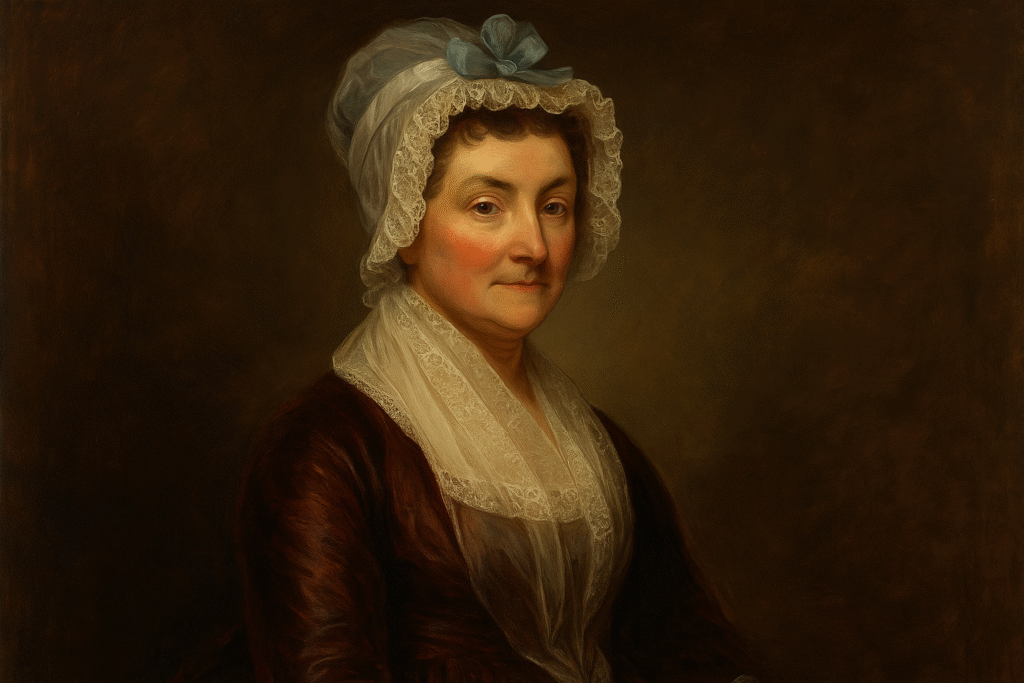
Even centuries after her death, Abigail Adams remains a symbol of courage and conviction. When one reflects on the enduring facts about Abigail Adams, her ability to foresee the social and political challenges of modern America becomes evident. She believed that liberty and justice could not exist unless all citizens—regardless of gender—were included in the conversation.
Consequently, her advocacy for women’s education and property rights foreshadowed the feminist movements of the 19th and 20th centuries. The fact that she articulated these ideas during the Revolutionary War era, when women were legally and socially bound by the authority of men, underscores her extraordinary insight and bravery.
Her understanding that moral strength arises from education and equality continues to influence modern debates on gender and human rights. Through her writings, Abigail Adams demonstrated that reform begins with dialogue and that the pen can be as powerful as any political office. These timeless facts about Abigail Adams inspire educators, leaders, and activists to seek justice and equality through wisdom and compassion.
Representation in Modern Culture
In the realm of public memory, Abigail Adams has become more than a historical figure. She represents the conscience of early America. Films, documentaries, and books have immortalized her as both an intellectual and emotional force behind the founding of the United States.
Moreover, the National Park Service continues to preserve her home and legacy through the Adams National Historical Park, which attracts thousands of visitors each year. There, her letters and artifacts provide intimate glimpses into her daily life and thoughts, bridging the gap between the personal and the political.
In modern discussions of the Founding Fathers, Abigail’s name stands alongside those of John Adams, George Washington, and Benjamin Franklin. However, she occupies a unique space — a voice of empathy and reason who reminded America that equality must include every citizen. Her influence also extends to literature and education. Where she is frequently cited as a pioneer of female education and women’s rights.
Impact on Future Generations
Through her letters and her moral vision, Abigail Adams set a precedent for future women in politics and education. Her daughter-in-law, Louisa Catherine Adams, and later figures like Dolley Madison and Martha Washington, carried her spirit of grace and strength into their own public lives.
More importantly, her son John Quincy Adams, influenced deeply by his mother’s wisdom, became one of the strongest advocates for liberty and abolition during his presidency. These facts about Abigail Adams show that her values transcended generations. Shaping not only her immediate family but also the broader American moral landscape.
Additionally, her advocacy for intellectual independence among women inspired reformers such as Elizabeth Cady Stanton and Susan B. Anthony. Although these leaders lived decades after her death, they often echoed her ideas about education, autonomy, and justice. Her early appeal for a new code of laws granting women more respect and opportunity became a philosophical cornerstone of women’s suffrage.
If it’s not too much trouble, I’d recommend reading this article The Best 37 Interesting Facts About Hillary Clinton. It could add some valuable context to our discussion.
Lessons from Abigail Adams for Today
In an age defined by political polarization and social division, Abigail Adams’s legacy offers enduring lessons in empathy, respect, and dialogue. Her letters show that disagreement does not destroy relationships; rather, mutual respect and shared ideals can sustain them. Her friendship with Thomas Jefferson, though tested by politics, eventually healed through forgiveness and understanding — a timeless example of reconciliation in leadership.
Furthermore, her warnings against foreign influence, her concern for equal rights, and her advocacy for education remain remarkably relevant in contemporary discourse. She believed that a free nation required moral citizens — people capable of thinking independently and acting with integrity.
Indeed, these facts about Abigail Adams teach us that true patriotism is not blind loyalty but a commitment to moral principle. Her life proves that influence does not always demand a public office; it can stem from intellect, compassion, and conviction expressed in private words that echo across centuries.
Why Abigail Adams Still Matters
Above all, Abigail Adams reminds the modern world that progress begins with courage — the courage to question, to write, and to dream of a more just society. She showed that wisdom has no gender and that reason and love can coexist in the pursuit of truth.
Her belief that women should be “partners in governance, not subjects to it” paved the way for the ongoing fight for equality. Today, as we continue striving toward inclusivity in education, leadership, and law, her example serves as both a foundation and a challenge to do better.
When viewed through the lens of history, the facts about Abigail Adams reveal her as a woman who lived ahead of her time. A scholar without a school, a leader without a title, and a revolutionary whose words continue to guide the nation she helped shape.
Facts About Abigail Adams: Final Thoughts
Ultimately, the story of Abigail Adams is not merely that of a supportive wife or early First Lady. It is the story of a thinker who stood shoulder to shoulder with the Founding Fathers in intellect and principle. Through her letters, her ideas, and her enduring influence, she gave voice to the moral conscience of America.
Even now, more than two centuries later, her message resonates: a call for justice, compassion, and equality that remains as urgent as ever. Her legacy challenges each generation to “remember the ladies” — and to remember that liberty, without fairness, remains incomplete.
Thus, as we look back on the many facts about Abigail Adams, we see not only the woman behind the president but the philosopher who illuminated the meaning of freedom itself. Her pen shaped a nation’s conscience, and her words continue to shape its future.
External Reference:
For further reading and verified historical materials, visit the National Park Service: Adams National Historical Park.