47 Astonishing Facts About Phosphorus That Will Surprise You
Facts About Phosphorus
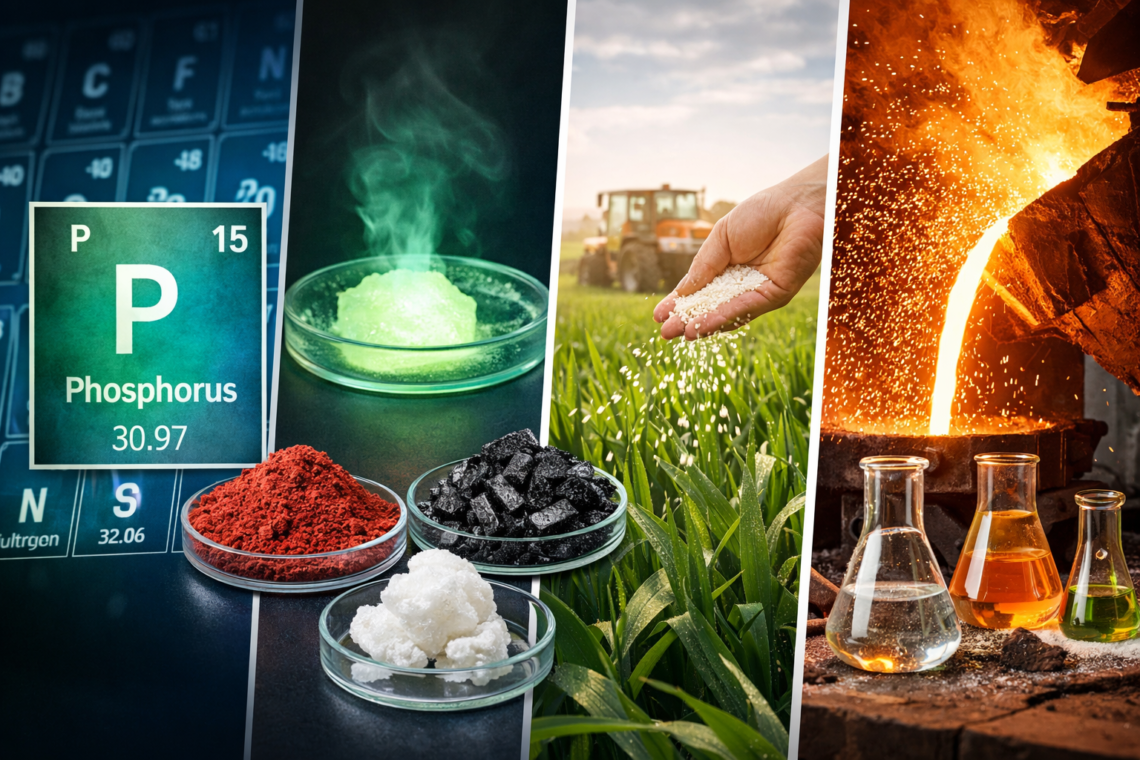
Among the vast family of chemical elements on the periodic table, phosphorus holds a special place as the “bringer of light.” In fact, the name originates from the Greek word “phosphoros,” meaning “light-bearer.” As one explores the facts about phosphorus, it becomes clear that this element plays an important role in both living things and industrial processes. Though found naturally in phosphate rock, its various forms—white phosphorus, red phosphorus, and black phosphorus—reveal remarkable diversity in appearance, properties, and uses.
Interestingly, the atomic number of phosphorus is 15, and its atomic weight is about 30.97. As a chemical element, phosphorus cannot be found freely in nature because it is too reactive. Instead, it exists in phosphorus compounds such as calcium phosphate and sodium phosphate—both critical to agriculture, nutrition, and industry. Moreover, its electron configuration (1s² 2s² 2p⁶ 3s² 3p³) reflects its position among the essential elements that sustain animal life and aquatic life alike.
Ok, now let’s really dive into more amazing facts about Phosphorus.
The Discovery of Phosphorus
The Fascinating Story of Hennig Brandt
In 1669, Hennig Brandt, a German alchemist, accidentally discovered phosphorus while experimenting with buckets of urine. He was searching for the mythical “philosopher’s stone” but instead created a glowing white substance—white phosphorus. The eerie green-white light it emitted fascinated early scientists and earned phosphorus its poetic title, the “bringer of light.”
Later, Gottfried Wilhelm Leibniz documented Brandt’s discovery, which quickly spread across Europe, sparking interest in the element’s mysterious glow. This remarkable origin story is one of the most famous phosphorus facts, emphasizing how human curiosity often leads to groundbreaking discoveries.
Forms and Properties of Phosphorus

White, Red, and Black Phosphorus: The Most Common Forms
Among the various phosphorus forms, the white form is the most reactive and dangerous. At room temperature, it emits a faint glow due to slow oxidation, releasing phosphorous acid and producing heat. This property once made it a vital ingredient in match production, although its use was later restricted because it caused severe burns and poisoning in factory workers.
In contrast, red phosphorus is far more stable and less toxic. It is used in safety matches, fireworks, and even in phosphorus supplements in very controlled doses. Meanwhile, black phosphorus, the least reactive form, behaves like graphite and is a poor conductor of heat but a potential star in modern electronics due to its unique semiconducting properties.
Physical and Chemical Properties of Phosphorus
When comparing the properties of phosphorus, it is found that the element’s oxidation state varies from –3 to +5, depending on the phosphorus compounds it forms. It burns brilliantly in oxygen to form phosphoric acid, a key substance used in soft drinks, food additives, and fertilizers.
Moreover, elemental phosphorus exists in several allotropes that exhibit distinct behaviors under ordinary conditions. The element’s pure form must be stored underwater to prevent it from igniting spontaneously in air.
Phosphorus in Nature and the Human Body

An Essential Element for Life
Importantly, one of the crucial facts about phosphorus is its indispensable role in the human body. Approximately 85% of the amount of phosphorus in the body is stored in bones and teeth, combined with calcium phosphate. The remainder is distributed among soft tissues, cell membranes, and fluids, where it supports vital processes such as energy transfer and oxygen levels regulation.
Additionally, phosphorus contributes to the structure of DNA and RNA, making it essential for all living things. Healthy individuals maintain balanced phosphorus levels through a variety of foods, including dairy products, protein-rich foods, and deli meats.
However, phosphorus deficiency can occur when people fail to meet their adequate intake, leading to fatigue, weak bones, and muscle dysfunction. Health care providers often recommend dietary supplements or adjustments in diet to maintain enough phosphorus for healthy adults.
Industrial and Agricultural Uses of Phosphorus

The Primary Use of Phosphorus in Modern Industry
When considering industrial facts about phosphorus, it becomes apparent that this element has an important role in supporting global food production and various manufacturing processes. The primary use of phosphorus lies in the creation of fertilizers, which are derived from phosphate rock. These fertilizers enrich the soil with essential nutrients, promoting plant growth and ensuring food security for billions of people.
Moreover, phosphorus compounds like phosphoric acid and phosphate ion are used in production of steel, water treatment, and detergent manufacturing. In phosphoric acid, phosphorus exhibits an oxidation state of +5, enabling it to react with bases to form different forms of phosphate that are valuable in both agriculture and industry.
Phosphoric Acid: The Backbone of Many Industries
In fact, phosphoric acid is among the most commercially significant phosphorus compounds. It serves as a base ingredient in soft drinks and food additives to control acidity and enhance flavor. However, high phosphate additives intake can lead to adverse effects on healthy people, particularly when consumed through fast foods and processed items.
Additionally, the compound’s important element in industrial chemistry is demonstrated by its use in dental products, rust removal, and phosphate coating for metals. Health care providers sometimes use it in the production of phosphorus lab tests and dietary supplements, ensuring that healthy individuals maintain enough phosphorus for metabolic balance.
Phosphorus in the Environment
Phosphorus and Its Impact on Aquatic Life
Among the most critical facts about phosphorus are its environmental effects. Excess phosphorus entering lakes and rivers can cause high levels of phosphorus, which disrupt aquatic life by promoting algal blooms. When these blooms decay, oxygen levels in the water drop, suffocating fish and other organisms.
Furthermore, runoff from phosphate fertilizers, detergents, and industrial waste contributes to this pollution. Consequently, many countries, including the United States, have implemented regulations to limit phosphate ion concentrations in soft drinks and cleaning products.
Phosphorus Recycling and Sustainability
Because phosphate rock is a finite resource, scientists and governments are exploring sustainable ways to recover phosphorus from different minerals and organic waste. Recycled phosphorus from sewage or agricultural runoff could significantly reduce dependency on mining.
Therefore, the future of phosphorus management depends on innovative phosphorus forms and efficient phosphorus lab tests that detect imbalances in ecosystems. Through proper recycling and waste treatment, the world can ensure that there will never be too much phosphorus harming nature or too little phosphorus for agricultural productivity.
Phosphorus in Everyday Life

Common Products Containing Phosphorus
Surprisingly, phosphorus touches nearly every aspect of modern life. Beyond fertilizers and industrial chemicals, it is found in dairy products, deli meats, fast foods, and even soft drinks. The addition of phosphate additives helps extend shelf life and maintain texture.
However, excessive consumption of these products can lead to extra phosphorus intake, which may disturb the mineral balance in the body. For healthy adults, the adequate intake of phosphorus ranges between 700 to 1250 milligrams daily, depending on diet and age.
Phosphorus in Medicine and Health Care
In the medical field, phosphorus lab tests are routinely conducted by health care providers to monitor phosphorus levels in patients with chronic kidney disease or heart disease. For individuals with kidney problems, less phosphorus is excreted from the body, causing potentially dangerous mineral buildup.
Therefore, medical professionals often advise reducing consumption of protein-rich foods, phosphate additives, and soft drinks. In some cases, phosphorus supplements are prescribed to address phosphorus deficiency, ensuring that both healthy individuals and those with health conditions maintain proper mineral balance.
Unique and Scientific Facts About Phosphorus
Phosphorus in the Periodic Table
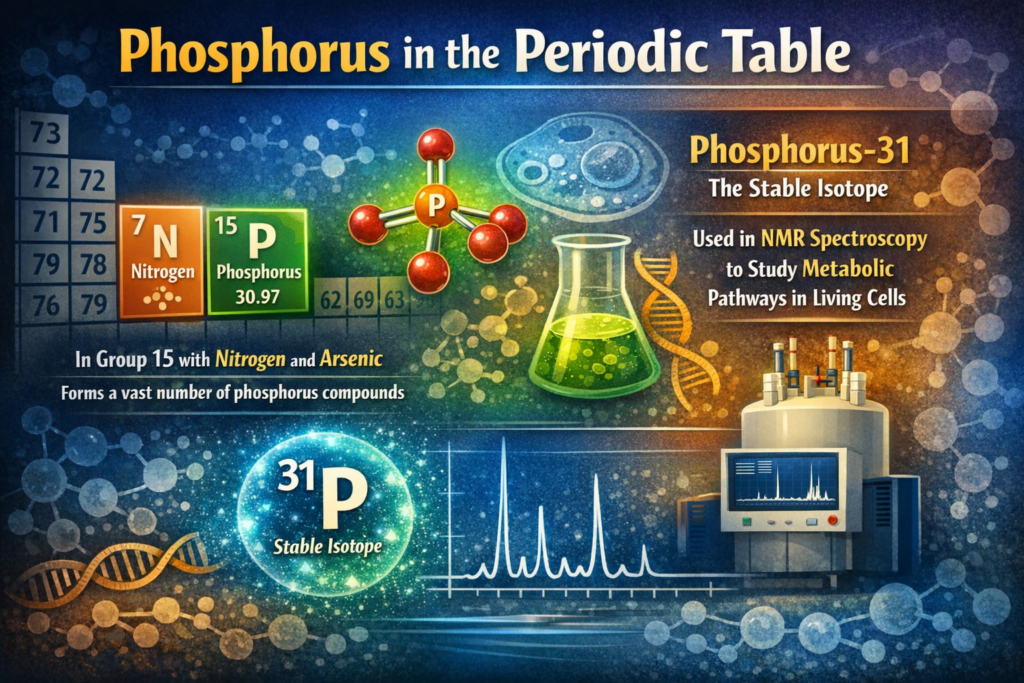
From a scientific standpoint, phosphorus stands in Group 15 of the periodic table, alongside nitrogen and arsenic. Its electron configuration allows it to form a vast number of phosphorus compounds, many of which are vital in both biological and industrial systems.
Interestingly, the element has one stable isotope, phosphorus-31, which is used in nuclear magnetic resonance (NMR) spectroscopy to study metabolic pathways in living cells. This property highlights one of the more advanced phosphorus facts that bridge chemistry and biomedicine.
Ordinary Conditions and Reactivity
At ordinary conditions, phosphorus is not found as a free element. Instead, it forms different minerals such as calcium phosphate and calcium carbonate. Moreover, its reactivity changes with its form—white phosphorus ignites spontaneously in air, whereas red phosphorus and black phosphorus remain stable.
At room temperature, white phosphorus emits a dim green-white light, a phenomenon once exploited for early night illumination. In pure phosphorus, this luminescence results from oxidation—a process that releases phosphorous acid vapors.
Historical and Cultural Facts About Phosphorus
The Early Uses of Phosphorus
Historically, some of the earliest facts about phosphorus involve its use in match production and early lighting. During the 19th century, white phosphorus was widely used in matches because it could ignite easily through friction. However, workers in match factories suffered from a terrible condition known as “phossy jaw,” caused by prolonged exposure to the fumes, which led to severe burns and bone decay.
Eventually, the United States and several European nations banned the use of white phosphorus in matches, leading to the adoption of red phosphorus, which was safer and equally effective. These historical events underscore how the understanding of phosphorus forms evolved to protect human health and improve industrial safety standards.
Phosphorus in Alchemy and the “Bringer of Light”
One of the most fascinating phosphorus facts lies in its symbolic identity. Since Hennig Brandt’s discovery, phosphorus was often called the “bringer of light,” a term that reflected both its luminescent quality and its mysterious allure. Early alchemists, captivated by its white colour and glowing nature, believed it to be a magical substance capable of revealing hidden truths of nature.
Over time, scientists discovered that this glow was due to a slow chemical reaction between white phosphorus and oxygen—a process called chemiluminescence. Although the mystical perception faded, the fascination with phosphorus never truly disappeared.
Phosphorus in Food and Nutrition

Sources of Phosphorus in the Diet
In terms of nutrition, one of the most important facts about phosphorus is that it exists naturally in many variety of foods. Common dietary sources include dairy products, meat, fish, nuts, and whole grains. Phosphorus compounds within these foods help maintain cell membranes, facilitate energy transfer, and support the function of soft tissues and bones.
However, in modern diets, food additives and phosphate additives have significantly increased phosphorus intake. Fast foods, processed meats, and soft drinks contain inorganic phosphates that are absorbed more readily by the body. While these can help maintain phosphorus levels for healthy adults, excessive intake may cause harm over time.
Phosphorus Deficiency and Excess Intake
Although phosphorus deficiency is rare among healthy individuals, it may occur due to malnutrition, alcohol abuse, or certain health conditions. Symptoms can include muscle weakness, poor bone formation, and fatigue. In such cases, phosphorus supplements or dietary adjustments can restore balance.
Conversely, too much phosphorus—particularly from phosphate additives or soft drinks—may contribute to heart disease, especially in people with chronic kidney disease. Therefore, health care providers encourage maintaining adequate intake and avoiding excessive consumption of phosphorus-rich processed foods.
Phosphorus and the Human Body: A Closer Look
How the Body Utilizes Phosphorus
The human body relies on phosphorus for numerous functions. Most of the body’s phosphorus exists as calcium phosphate in bones and teeth, giving them strength and rigidity. The remaining phosphorus assists in energy transfer, specifically through molecules like ATP (adenosine triphosphate), which fuels every cellular process.
Moreover, phosphorus is a key component of cell membranes, as it forms the backbone of phospholipids, maintaining cell structure and regulating the flow of nutrients. Without enough phosphorus, the body would struggle to sustain essential processes such as metabolism and oxygen levels regulation.
Phosphorus and Chronic Health Conditions
An essential consideration among phosphorus facts is its relationship with chronic illnesses. People suffering from chronic kidney disease often have difficulty excreting phosphorus efficiently, leading to high levels of phosphorus in the blood. This imbalance can weaken bones and contribute to heart disease.
To mitigate these risks, health care providers may recommend medications called “phosphate binders,” which limit phosphorus absorption from food. They may also encourage reducing phosphate additives found in fast foods and soft drinks, emphasizing a diet based on natural, whole foods instead.
Phosphorus and Its Role in Technology

Modern Innovations Using Phosphorus
Beyond health and agriculture, phosphorus has found remarkable applications in modern technology. Black phosphorus, for example, has emerged as a promising material for electronics because of its exceptional semiconducting properties. Unlike white phosphorus, it is stable and non-toxic, making it suitable for nanotechnology and energy storage devices.
Moreover, red phosphorus continues to be used in safety equipment such as matches, fireworks, and flame retardants. Phosphorus compounds are also used in the production of steel and alloys, enhancing strength and corrosion resistance. These innovations demonstrate the important role of phosphorus in shaping technological progress.
Phosphorus in Environmental Science
In environmental science, phosphorus is studied for its dual identity—both as a life-sustaining nutrient and as a pollutant when present in high levels of phosphorus. Scientists analyze phosphorus lab tests to measure phosphorus intakes across ecosystems, ensuring the balance between agricultural productivity and ecological safety.
Consequently, the element remains central to discussions on sustainability, resource management, and environmental protection—fields that increasingly depend on the responsible handling of phosphate rock and different minerals containing phosphorus.
Facts About Phosphorus: Interesting Scientific Trivia
- The second most abundant mineral in the human body after calcium is phosphorus.
- Pure phosphorus can ignite spontaneously in air at temperatures as low as 30°C.
- The first person to isolate phosphorus, Hennig Brandt, was experimenting with buckets of urine when he made his discovery.
- Pencil lead contains graphite, not phosphorus, though both share a similar dark appearance in their black phosphorus form.
- At room temperature, white phosphorus glows faintly in the dark, a property once described as green-white light.
- According to the U.S. Geological Survey (source: usgs.gov), the United States ranks among the top producers of phosphate rock, a critical resource for global fertilizer supply.
The Role of Phosphorus in Ecosystems

Phosphorus as an Essential Element for Living Things
Among the most fascinating facts about phosphorus is its crucial role in sustaining living things. Phosphorus is one of the essential elements for all life forms because it is a key part of DNA, RNA, and ATP — the molecules that store and transfer energy in cells. Without phosphorus, life as we know it would not exist. It helps control how organisms use and store energy, influencing growth, repair, and reproduction.
In animal life, phosphorus maintains the structure of cell membranes and aids in the functioning of soft tissues. In aquatic life, phosphorus is often the limiting nutrient, meaning its availability controls the growth of organisms in oceans and freshwater systems. When too much phosphorus enters water bodies, it can cause imbalances, but in small quantities, it is indispensable for maintaining healthy ecosystems.
The Phosphorus Cycle
The phosphorus cycle is another topic frequently explored in discussions about phosphorus facts. This natural cycle describes how phosphorus moves through rocks, water, soil, and living organisms. Over millions of years, phosphate rock erodes, releasing phosphate ion into soil and water, where plants absorb it. Animals then eat these plants, using the phosphorus in their bodies. When they die, decomposition returns phosphorus to the earth, continuing the cycle.
However, human activity — such as the use of phosphate fertilizers and detergents — has disrupted this balance. Consequently, environmental scientists are working on sustainable ways to manage phosphorus compounds to prevent excessive runoff and to protect aquatic life from harmful algal blooms.
The Chemical Behavior and Structure of Phosphorus
Understanding the Atomic Structure
When exploring the properties of phosphorus, one must start with its atomic structure. Phosphorus has an atomic number of 15, which means it has 15 phosphorus atoms in its nucleus, surrounded by electrons arranged as 1s² 2s² 2p⁶ 3s² 3p³. This configuration gives phosphorus the ability to bond easily with other elements, forming compounds such as phosphoric acid and phosphorous acid.
Moreover, phosphorus exhibits multiple oxidation states, ranging from –3 to +5, allowing it to form diverse phosphorus compounds. These oxidation states influence the element’s reactivity and are a major reason for the variety of its chemical behavior. Under ordinary conditions, phosphorus is reactive but stable in compound form, and it rarely exists as a free element in nature.
Allotropes and Physical Properties
Phosphorus exists in several different forms, known as allotropes, including white phosphorus, red phosphorus, black phosphorus, and a less common violet form. Each has distinct physical and chemical characteristics:
- White phosphorus is waxy, translucent, and highly toxic. It glows in the dark and can ignite spontaneously at room temperature.
- Red phosphorus is more stable, non-toxic, and used in matches and flame retardants.
- Black phosphorus is the most stable allotrope, resembling graphite, and is a poor conductor of heat.
- The white form must be stored under water to prevent it from catching fire in air.
These phosphorus forms demonstrate the element’s adaptability, making it one of the most intriguing and common elements used in science and industry today.
Phosphorus in Industry and Manufacturing

Phosphorus Compounds in Everyday Products
Industrial use of phosphorus spans countless applications. For instance, phosphoric acid is used in soft drinks, food additives, and dental products, while phosphorous acid serves as a reducing agent in chemical synthesis. Calcium phosphate and sodium phosphate are commonly found in dietary supplements and deli meats to preserve freshness and extend shelf life.
Additionally, phosphorus compounds are vital in production of steel, detergents, and fertilizers, influencing everything from agriculture to manufacturing. The primary use of phosphorus remains the development of fertilizers that enhance plant growth by replenishing phosphorus in the soil — an essential component of global food systems.
Phosphorus and Fire Safety
Historically, red phosphorus replaced white phosphorus in match-making due to safety concerns. However, it remains useful in other industries. It is now used in fire-retardant materials, pyrotechnics, and even military applications.
Yellow phosphorus, another term often used for white phosphorus, continues to be used in controlled environments for industrial processes but is handled with extreme caution because of its toxicity and potential to cause severe burns.
Fun and Lesser-Known Facts About Phosphorus
- Phosphorus was discovered in 1669 by Hennig Brandt, who was attempting to turn urine into gold.
- The word “phosphorus” originates from the Greek word “phosphoros”, meaning light-bearer.
- Phosphorus is essential for all living things, including humans, animals, and plants.
- The white colour glow of phosphorus is caused by slow oxidation in the presence of oxygen.
- Black phosphorus could revolutionize electronics because of its ability to conduct electricity efficiently.
- Phosphorus intakes must be balanced, as both deficiency and excess can cause health problems.
- The element is found naturally in different minerals, including calcium phosphate and phosphate rock.
- Phosphorus atoms are not magnetic but can form complex crystal structures under pressure.
- The amount of phosphorus in the Earth’s crust is small but vital for sustaining all animal life and plant growth.
- The fact sheet from the National Institutes of Health notes that phosphorus is involved in hundreds of biochemical reactions in the body.
Phosphorus and Modern Environmental Concerns

Managing High Levels of Phosphorus
Modern agriculture and industrial waste have led to high levels of phosphorus in soil and water systems. While phosphorus supports plant growth, excessive concentrations lead to eutrophication — a condition that suffocates aquatic life. To combat this, researchers are developing technologies to recover phosphorus from wastewater, reducing environmental harm and conserving this non-renewable resource.
Additionally, nations like the United States are implementing strict guidelines on phosphorus discharge to protect ecosystems. Scientists continue to study the adverse effects of unbalanced phosphorus on the planet, emphasizing the need for sustainable management of this important element.
Facts About Phosphorus: Frequently Asked Questions (FAQs)
What are the most important facts about phosphorus?
Among the most essential facts about phosphorus is that it is a chemical element with the atomic number 15 and an atomic weight of approximately 30.97. It is a crucial component of DNA, RNA, and ATP, making it vital for all living things. Phosphorus is also indispensable in agriculture as a key ingredient in fertilizers derived from phosphate rock. Furthermore, it exists in several different forms, including white phosphorus, red phosphorus, and black phosphorus, each with unique properties and applications.
Why is phosphorus called the “bringer of light”?
The name phosphorus comes from the Greek word “phosphoros,” meaning “light-bearer.” This title was inspired by the element’s remarkable glow in the dark, especially in its white form, which emits a soft green-white light at room temperature due to slow oxidation. This luminescence captivated early scientists and led to the poetic description of phosphorus as the “bringer of light.”
How does phosphorus affect the human body?
Phosphorus plays an important role in maintaining the human body’s structure and function. It combines with calcium to form calcium phosphate, which strengthens bones and teeth. Additionally, phosphorus supports energy transfer through ATP, helps maintain oxygen levels, and contributes to the function of cell membranes and soft tissues. However, both too much phosphorus and phosphorus deficiency can cause adverse effects, especially in people with chronic kidney disease.
What foods are rich in phosphorus?
Foods high in phosphorus include dairy products, fish, meat, nuts, eggs, and whole grains. It is also found in processed foods such as deli meats, fast foods, and soft drinks, where phosphate additives are commonly used to preserve texture and shelf life. For healthy adults, maintaining an adequate intake of phosphorus is vital to support normal metabolism and bone health.
What are the dangers of white phosphorus exposure?
Exposure to white phosphorus can be extremely dangerous. It is highly toxic and can cause severe burns, tissue damage, and respiratory problems if inhaled. Historically, factory workers who handled white phosphorus suffered from “phossy jaw,” a painful bone condition. Today, white phosphorus is carefully regulated, and its use is limited to controlled industrial and military settings to prevent injury.
How do health care providers check phosphorus levels?
Health care providers use phosphorus lab tests to measure phosphorus levels in the blood. These tests help diagnose conditions like phosphorus deficiency, chronic kidney disease, and heart disease. Maintaining balanced phosphorus levels is critical since less phosphorus can lead to weakness, while high levels of phosphorus can damage bones and organs.
Snippet-Ready Summary: Quick Facts About Phosphorus
- Element Name: Phosphorus
- Symbol: P
- Atomic Number: 15
- Atomic Weight: 30.97
- Discovery: Hennig Brandt, 1669 (from urine experiments)
- Common Allotropes: White, Red, Black Phosphorus
- Key Uses: Fertilizers, Food Additives, Steel Production, Flame Retardants
- Found In: DNA, Bones, Teeth, and Cell Membranes
- Toxicity: White phosphorus is highly toxic; red and black forms are stable.
- Environmental Impact: Excess phosphorus causes algal blooms affecting aquatic life.
- Daily Requirement: ~700 mg for healthy adults (via variety of foods).
(Source: U.S. Geological Survey & National Institutes of Health Fact Sheet)
Facts About Phosphorus Conclusion

In conclusion, the facts about phosphorus reveal an element that is both a life-sustaining nutrient and a powerful industrial resource. From its eerie glow that once fascinated alchemists to its essential function in modern health and technology, phosphorus has profoundly shaped human civilization.
Moreover, phosphorus remains the second most abundant mineral in the human body, influencing everything from bone structure to energy transfer. Despite its benefits, improper management can lead to serious environmental and health challenges — such as high levels of phosphorus in water or excessive consumption through soft drinks and processed foods.
Therefore, as the world continues to depend on this important element, understanding how to balance its use in agriculture, industry, and nutrition becomes increasingly vital. By recognizing the delicate relationship between phosphorus forms, human health, and the environment, we can ensure that this remarkable “bringer of light” continues to illuminate our progress responsibly.
I’d really appreciate it if you could read this article Facts About Carbon Behind Life, Energy, and Climate Change when you have a moment. It’s related to what we’ve been discussing.
External Resource:
To learn more, visit the U.S. Geological Survey’s official phosphorus fact sheet.