Facts About Carbon Behind Life, Energy, and Climate Change
Facts About Carbon
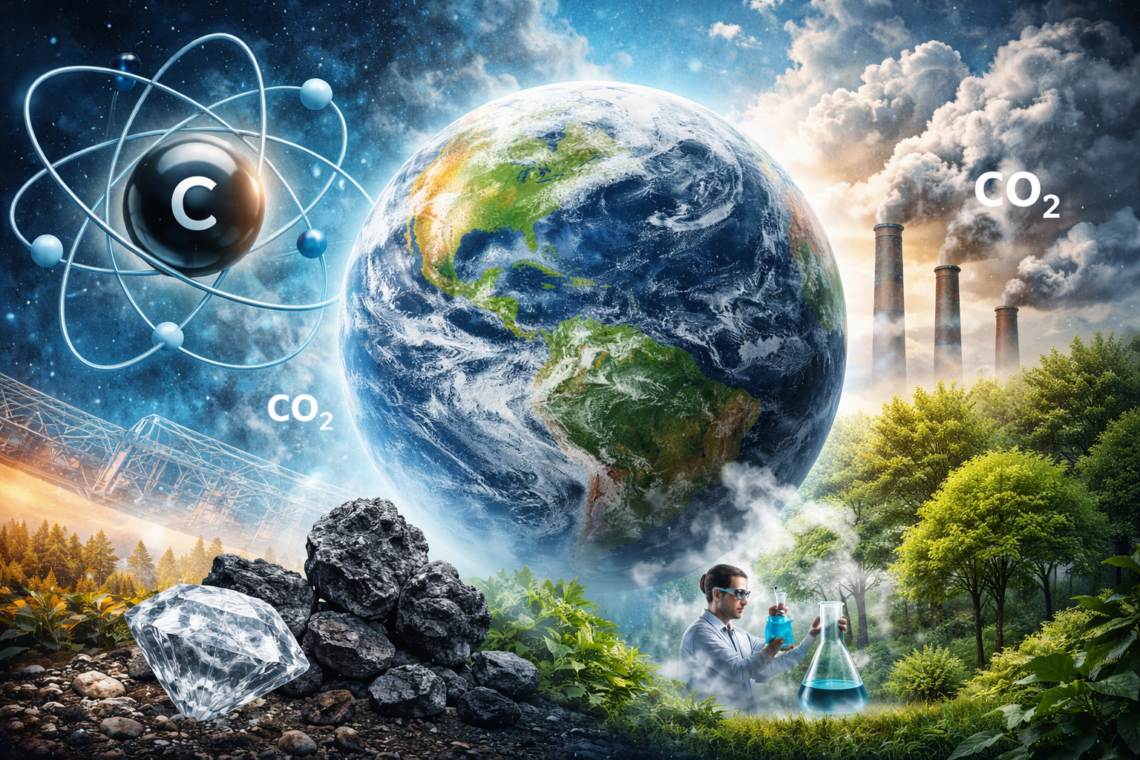
However, the word carbon is often heard in conversations about climate change, fossil fuels, and human activity, yet its deeper meaning is frequently misunderstood. Moreover, facts about carbon reveal why this chemical element is considered one of the most important elements in the universe. Therefore, a closer look at facts about carbon helps explain how life exists, how energy is produced, and why environmental balance matters so deeply.
Additionally, carbon is a chemical element with the symbol C and an atomic number of six, meaning the number of protons in its nucleus is fixed and distinctive. As a result, carbon atoms possess unique properties that allow atoms bond together through covalent bonds, forming complex molecules essential to every living organism. Consequently, facts about carbon are directly connected to living thing structures, organic chemistry, and carbon-based life forms.
Furthermore, empathy is often needed when carbon is discussed, as many readers feel overwhelmed by terms like greenhouse gases, carbon footprint, or carbon monoxide poisoning. Therefore, facts about carbon will be explained here with clarity, respect, and scientific authority, while acknowledging genuine concerns about planet Earth and human activities.
Facts About Carbon as a Chemical Element
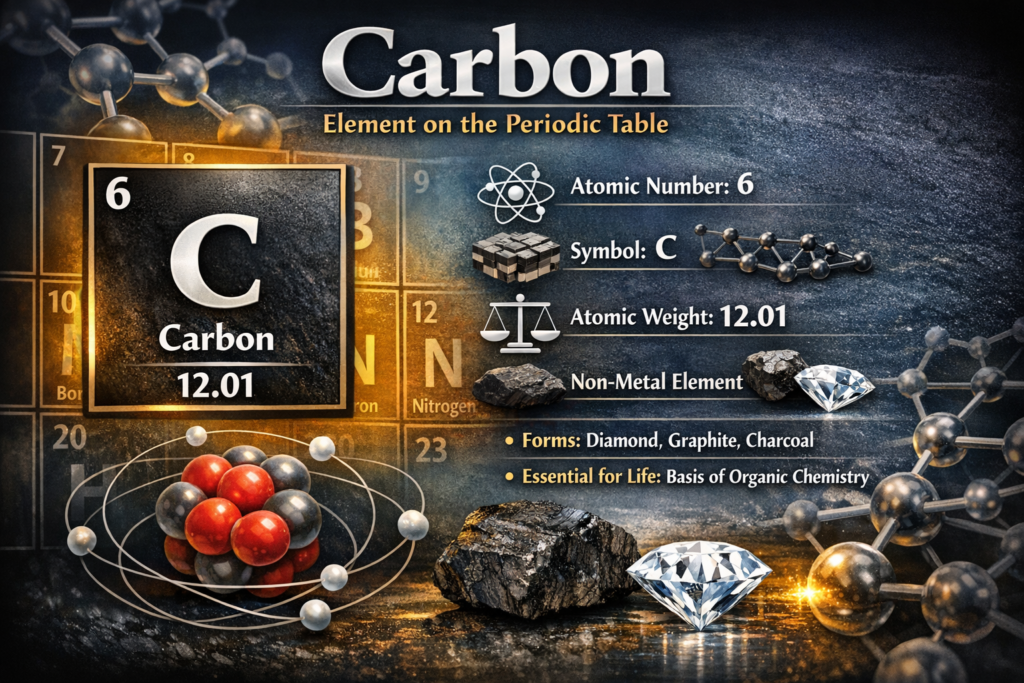
Firstly, carbon is classified as a chemical element found on the periodic table, where its atomic weight and oxidation state define how it reacts with other elements. Additionally, carbon is the 15th most abundant element in earth’s crust and plays a vital role in earth’s atmosphere.
Secondly, facts about carbon show that its outer shell contains four electrons, allowing it to form four strong covalent bonds. As a result, elemental carbon can create more compounds than any other element. Therefore, carbon compounds are responsible for organic compounds, crude oil, natural gas, and methane gas.
Moreover, carbon exists in different forms, known as carbon forms or forms of carbon. These include pure carbon structures such as diamond, graphite, and amorphous carbon. Consequently, diamond is known as one of the hardest materials, while graphite ranks among the softest materials used in carbon steel and carbon black production.
Notably, carbon’s incredible ability to bond in chains and rings explains why carbon nanotubes and carbon fiber technology have transformed modern materials science. Hence, many materials scientist experts recognize facts about carbon as foundational knowledge for innovation.
Facts About Carbon and Its Role in Life
Importantly, all living organisms are built from carbon atoms, making carbon a key ingredient of animal life and the human body. Additionally, organic chemistry is entirely centered on carbon compounds formed through high temperatures, high pressure, or biological processes.
Therefore, facts about carbon confirm that carbon-based life forms dominate planet Earth. Moreover, isotope carbon-14 is used in carbon dating, allowing ancient times to be studied with precision.
Featured Snippet: Quick Facts About Carbon
- Fact: Carbon is formed inside massive star cores through the triple-alpha process, where helium nuclei fuse during stellar nucleosynthesis.
- Source: National Aeronautics and Space Administration (NASA)
Facts About Carbon in the Carbon Cycle and Earth’s Systems

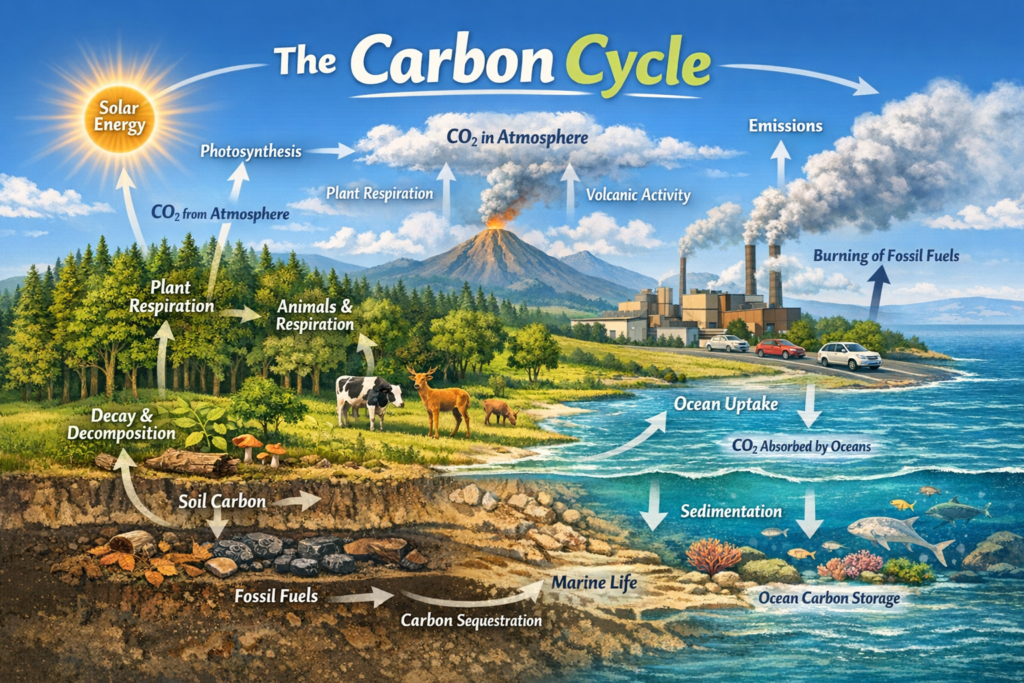
However, facts about carbon cannot be fully understood without examining the carbon cycle, which describes how carbon moves through earth’s surface, oceans, and the atmosphere. Therefore, carbon is constantly exchanged between carbon sinks such as forests, oceans, and soil. Moreover, this cycle has existed since ancient times and continues to regulate life on planet Earth.
Additionally, carbon enters earth’s atmosphere mainly as a form of carbon dioxide released through human activity and natural events. Consequently, respiration in living organisms, volcanic eruptions, and the decay of waste products all contribute to the amount of carbon dioxide present. As a result, the amount of carbon dioxide and levels of carbon dioxide are closely monitored in the united states and worldwide using carbon dioxide monitors.
Furthermore, facts about carbon explain that oceans absorb large quantities of carbon dioxide, helping stabilize climate systems. However, when high concentrations are absorbed, ocean acidification may occur. Therefore, this process has become a major reason for concern among scientists studying climate change.
Importantly, carbon cycle disruptions are often linked to human activities such as burning fossil fuels like crude oil and natural gas. As a result, greenhouse gases such as carbon dioxide and methane gas trap heat, strengthening the greenhouse effect. Thus, facts about carbon clearly show its major role in regulating global temperature.
Facts About Carbon and Climate Change
Notably, facts about carbon are central to understanding climate change and its emotional weight for many readers. Therefore, it must be acknowledged that anxiety around rising temperatures and environmental damage is valid and shared by communities globally.
Additionally, carbon footprint measurements are used to estimate how much carbon dioxide is produced by individual actions and industrial processes. Consequently, transportation, electricity generation, and manufacturing increase the amount of co released into the air.
Moreover, facts about carbon reveal that fossil fuels formed over millions of years from ancient plant and animal matter. As a result, burning them rapidly releases stored carbon back into the atmosphere. Hence, this imbalance is considered a major reason behind accelerating climate change trends.
Importantly, greenhouse gases remain in earth’s atmosphere for long periods, meaning today’s emissions affect future generations. Therefore, facts about carbon help explain why carbon sinks must be protected and restored to maintain environmental balance.
Facts About Carbon in Different Forms and Materials

Meanwhile, facts about carbon include its existence in many different forms, each with unique properties. For example, diamond films are composed of pure carbon arranged under high pressure, creating one of the hardest materials known. Conversely, graphite forms under lower pressure and is used in pencils and batteries.
Additionally, amorphous carbon lacks a crystalline structure and appears in materials such as carbon black and soot. Consequently, carbon scatters light in smoke detectors, helping detect fires early.
Moreover, carbon nanotubes and carbon fiber technology have reshaped modern engineering. As a result, lightweight and extremely strong materials are used in aerospace, medicine, and renewable energy. Hence, facts about carbon continue to inspire innovation.
If you have some free time, it might be helpful to check out this article The Best 22 Intriguing Facts About Diamonds. It covers some relevant points.
Facts About Carbon in Gases and Safety
However, not all facts about carbon are comforting. Therefore, carbon monoxide poisoning is a serious risk when incomplete combustion occurs. Moreover, carbon monoxide is a colorless gas that interferes with oxygen delivery in the human body. Consequently, co detector devices and carbon dioxide monitors are essential safety tools in homes.
Additionally, dry ice, or solid carbon dioxide, exists at room temperature only as a solid under pressure. As a result, it is widely used in cooling and scientific transport.
Facts About Carbon in Atomic Structure and Nuclear Origins
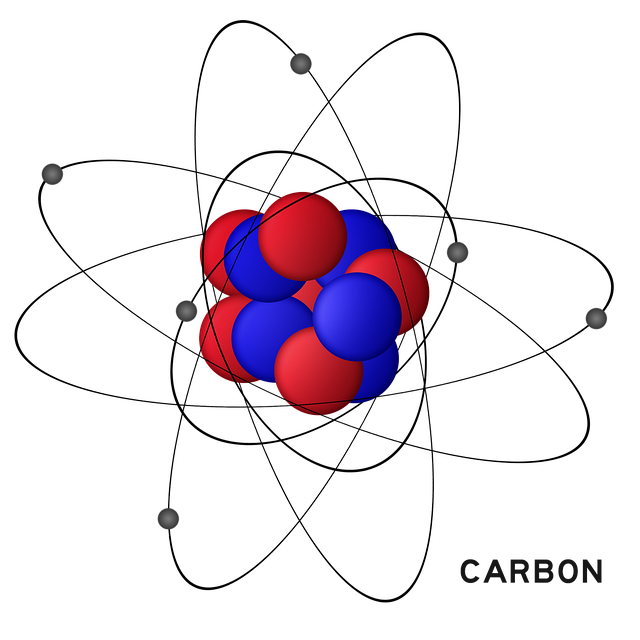
Firstly, facts about carbon begin at the atomic level, where carbon atoms are defined by their atomic number and atomic weight. Therefore, each carbon atom contains six protons in its nucleus, while different numbers of neutrons create various isotopes. Moreover, isotope carbon-14 is especially important because it enables carbon dating, which is used to study ancient times and historical artifacts.
Additionally, facts about carbon explain that atoms bond through shared electrons in the outer shell. Consequently, carbon can form stable covalent bonds with itself and other elements. As a result, complex molecules essential for living organisms are formed with remarkable efficiency.
Furthermore, facts about carbon extend beyond planet Earth and into cosmic origins. Therefore, carbon is created inside massive star cores through stellar nucleosynthesis. During this process, helium nuclei combine in what is known as the triple-alpha process. As a result, elemental carbon was produced long before life existed on Earth, even shortly after the Big Bang.
Notably, this cosmic origin highlights why carbon is found across the universe and why it plays a major role in forming planets, atmospheres, and life-supporting systems. Hence, facts about carbon connect humanity to the stars in a deeply meaningful way.
Facts About Carbon in Living Organisms
Importantly, facts about carbon show that every living thing relies on carbon-based structures. Therefore, proteins, fats, carbohydrates, and DNA are all organic compounds built from carbon atoms. Moreover, the human body is composed of approximately 18 percent carbon by mass, underscoring its vital role in survival.
Additionally, facts about carbon confirm that animal life and plant life depend on carbon to store and release energy. Consequently, photosynthesis captures carbon dioxide from earth’s atmosphere and converts it into usable energy. As a result, oxygen is released as a byproduct, supporting all aerobic life forms.
Furthermore, carbon compounds allow cells to communicate, reproduce, and repair damage. Therefore, without carbon’s incredible ability to form stable yet flexible bonds, life as it is known would not exist.
Facts About Carbon in Industry and Human Progress
Meanwhile, facts about carbon have shaped human civilization in countless ways. Therefore, carbon steel has been used for centuries in construction, tools, and transportation. Moreover, fossil fuels such as coal, crude oil, and natural gas fueled industrial growth and technological advancement.
Additionally, facts about carbon reveal that modern industries rely heavily on carbon black for tires, inks, and plastics. Consequently, carbon fiber technology has enabled the creation of lighter, stronger materials used in medicine, architecture, and renewable energy systems.
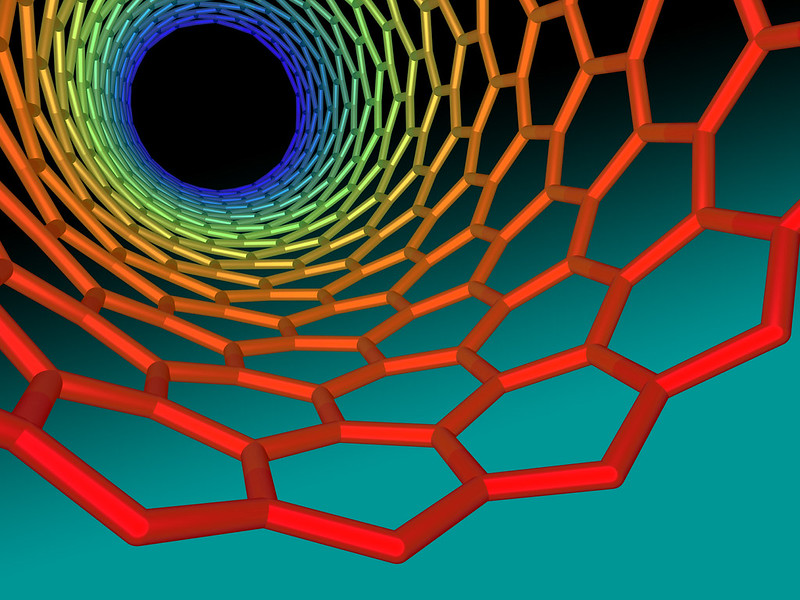
Importantly, carbon nanotubes represent a new form of carbon with extraordinary strength and conductivity. As a result, they are studied by every materials scientist seeking future breakthroughs. Hence, facts about carbon continue to drive innovation and economic development.
Facts About Carbon, Pollution, and Responsibility
However, facts about carbon also highlight the consequences of unchecked human activity. Therefore, high concentrations of greenhouse gases intensify the greenhouse effect, trapping heat in earth’s atmosphere. Moreover, carbon monoxide poisoning remains a serious risk in enclosed spaces, emphasizing the need for co detector use.
Additionally, waste products from industrial processes increase the amount of carbon dioxide released into the air. Consequently, the carbon footprint of nations and individuals is closely analyzed, especially in the united states.
Facts About Carbon in Environmental Balance and Earth’s Future

However, facts about carbon must also be viewed through the lens of environmental responsibility and long-term sustainability. Therefore, carbon sinks such as forests, wetlands, and oceans play an important role in absorbing excess carbon dioxide from earth’s atmosphere. Moreover, these natural systems help regulate temperature and stabilize climate patterns on earth’s surface.
Additionally, facts about carbon show that when carbon sinks are damaged by deforestation or pollution, the balance of the carbon cycle is disrupted. Consequently, higher levels of carbon dioxide remain trapped in the air, contributing to climate change and ocean acidification. As a result, ecosystems that support animal life and human survival become increasingly vulnerable.
Furthermore, facts about carbon explain that human activities have significantly increased the amount of carbon dioxide released since the industrial era. Therefore, the burning of fossil fuels such as crude oil and natural gas has altered natural carbon flows that existed since ancient times. Hence, this imbalance is widely recognized as a major reason for rising global temperatures.
Importantly, empathy is needed when discussing these issues, as many people feel anxious or powerless in the face of environmental challenges. Therefore, facts about carbon should empower rather than overwhelm, encouraging informed choices and collective responsibility.
Facts About Carbon and Monitoring Technology
Meanwhile, facts about carbon include the technologies developed to measure and control its presence. Therefore, carbon dioxide monitors are widely used to track indoor air quality and atmospheric trends. Moreover, smoke detectors rely on carbon scatters produced by carbon black particles to detect early signs of fire.
Additionally, co detector devices are essential in preventing carbon monoxide poisoning, which occurs when carbon monoxide binds more strongly than oxygen in the bloodstream. Consequently, these safety systems save countless lives each year by providing early warnings.
Furthermore, facts about carbon reveal that dry ice, or solid carbon dioxide, is used in medicine, food preservation, and scientific research. As a result, its ability to sublimate at room temperature makes it a valuable tool across industries.
Facts About Carbon in Scientific Discovery

Notably, facts about carbon have earned global recognition in scientific research. Therefore, multiple Nobel Prize awards have been given for discoveries related to carbon chemistry, carbon compounds, and new form of carbon structures. Moreover, breakthroughs involving carbon nanotubes and graphene have transformed understanding of elemental carbon.
Additionally, facts about carbon show that its oxidation state flexibility allows it to participate in countless reactions. Consequently, this versatility explains why carbon is central to organic chemistry and the study of complex molecules.
Furthermore, carbon’s incredible ability to adapt under high pressure and high temperatures has resulted in diamond formation and other carbon forms with extreme properties. Hence, facts about carbon continue to inspire curiosity and innovation across generations.
Frequently Asked Questions About Carbon
What makes carbon one of the most important elements?
Because carbon atoms can form stable covalent bonds with many elements, complex molecules essential for living organisms are created, making carbon a vital role player in life systems.
Why are facts about carbon important for understanding climate change?
Because carbon dioxide and methane gas are greenhouse gases, their increasing levels of carbon dioxide intensify the greenhouse effect and influence global temperatures.
How does carbon exist in different forms?
Carbon exists as diamond, graphite, amorphous carbon, carbon nanotubes, and other carbon forms depending on pressure, temperature, and atomic arrangement.
What is carbon dating used for?
Carbon dating uses isotope carbon-14 to determine the age of organic materials from ancient times.
Why is carbon monoxide dangerous?
Carbon monoxide prevents oxygen transport in the human body, making carbon monoxide poisoning potentially fatal without detection.
How does carbon affect everyday life?
Facts about carbon show it influences energy, materials, food, air quality, and environmental health through human activity.
Carbon and Its Place in the Universe and Society
However, facts about carbon are not limited to Earth alone, as elemental carbon is found throughout the universe. Therefore, carbon produced in massive star interiors was scattered across space after stellar explosions, eventually becoming part of planets like Earth. Moreover, this cosmic journey highlights carbon’s incredible ability to connect the origins of the universe with daily human life.
Additionally, facts about carbon reveal that elemental form variations influence how civilizations have developed. Consequently, from charcoal used in ancient times to modern carbon fiber technology, human progress has been shaped by access to and understanding of carbon materials. As a result, societies have relied on carbon as a building block for tools, energy, and innovation.
Furthermore, facts about carbon show that carbon-based life forms dominate because carbon atoms can form long chains and rings. Therefore, complex molecules such as proteins and DNA are stable enough to support life yet flexible enough to evolve. Hence, carbon’s incredible ability remains unmatched among the most abundant elements.
Facts About Carbon in Health and Safety
Importantly, facts about carbon must also address health considerations. Therefore, carbon monoxide poisoning remains a significant risk when fuel-burning appliances malfunction. Moreover, smoke detectors and co detector systems are vital for early warning and prevention.
Additionally, facts about carbon explain that high concentrations of carbon dioxide can displace oxygen in enclosed spaces. Consequently, carbon dioxide monitors are increasingly used in workplaces and homes to ensure safe air quality. As a result, awareness of carbon-related risks directly protects human life.
Facts About Carbon: A Quick Closer Look
- Carbon is a chemical element with symbol C and atomic number six
- Carbon exists in many different forms, including diamond, graphite, and amorphous carbon
- Also Carbon plays a major role in climate change through greenhouse gases
- Carbon compounds are essential to all living organisms
- Carbon dating helps scientists study ancient times
Conclusion: Why Facts About Carbon Truly Matter
Ultimately, facts about carbon reveal why this incredible element is central to life, science, and the future of planet Earth. Therefore, from the smallest carbon atoms to vast carbon cycles, carbon influences every system that supports living organisms. Moreover, its role in climate change, energy production, and environmental balance cannot be ignored.
Additionally, facts about carbon remind readers that responsibility and understanding go hand in hand. Consequently, informed choices about fossil fuels, carbon footprint, and human activities can help protect earth’s atmosphere and ecosystems. As a result, individuals and societies alike are empowered to contribute positively.
Finally, facts about carbon connect humanity to the stars, the soil beneath our feet, and the breath we take each day. Hence, by appreciating carbon’s unique properties and vital role, a deeper respect for science, nature, and shared responsibility can be fostered.





One Comment
Pingback: