38 Facts About Arsenic: Uses, Risks, and Scientific Secrets
Facts About Arsenic
When people hear the word arsenic, they often think of poison, mystery, and danger. While that reputation is well deserved, there is much more to this remarkable substance than most people realize. Thus, understanding the most important facts about arsenic can help you make informed decisions about health, water safety, food consumption, and environmental awareness.
Furthermore, arsenic is a naturally occurring element found throughout the environment. Indeed it exists in the earth’s crust, water, air, and even some foods. Throughout history, arsenic has played significant roles in medicine, agriculture, industry, and criminal investigations. Consequently, learning accurate facts about arsenic is essential for understanding both its benefits and risks.
Scientifically, arsenic is a chemical element on the periodic table with the atomic number 33. It belongs to a group of elements known as metalloids because it exhibits properties of both metals and nonmetals. Moreover, arsenic can appear in several different forms, each with unique characteristics and levels of toxicity.
Although arsenic occurs naturally in small quantities, excessive exposure can lead to serious health concerns. Therefore, public health agencies around the world closely monitor arsenic levels in food and drinking water. In fact, in the United States, the U.S. Environmental Protection Agency has established an EPA standard to regulate arsenic in public water systems.
Furthermore, arsenic has a fascinating scientific history stretching back to ancient times. From its discovery by the renowned German philosopher and scientist Albertus Magnus to its use during the Victorian era, arsenic has left an undeniable mark on human civilization.
Thus this guide explores the most interesting and important facts about arsenic, including its properties, history, environmental presence, health effects, and modern applications. Additionally, we will examine how human activities influence arsenic contamination and what steps can help reduce arsenic exposure.
Snippet: Quick Facts About Arsenic
What Is Arsenic?
Indeed arsenic is a naturally occurring toxic element with the atomic number 33. Additionally it is found in the earth’s crust, groundwater, soil, and some foods. High levels of exposure can cause arsenic poisoning, while controlled forms are used in electronics and certain medical treatments.
Fact: According to the World Health Organization (WHO), arsenic contamination of groundwater affects millions of people worldwide and represents a significant public health concern.
Source: World Health Organization (WHO) – Arsenic Fact Sheet.
Facts About Arsenic: Understanding the Basics
Arsenic Is a Naturally Occurring Element
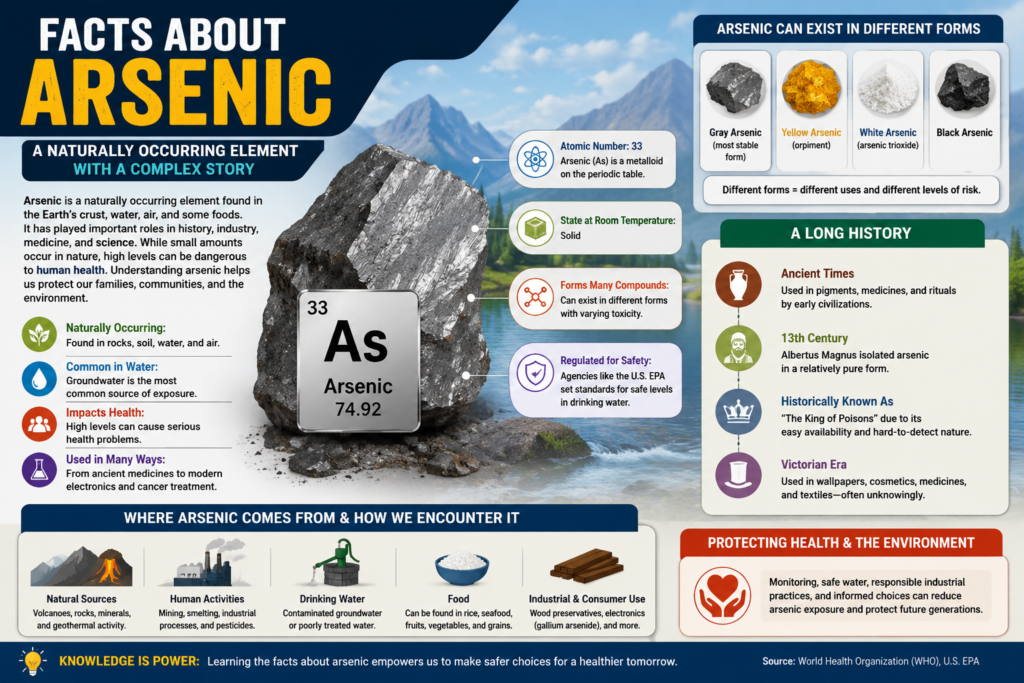
One of the most important facts about arsenic is that it is a naturally occurring element. Unlike synthetic chemicals created in laboratories, arsenic has existed on Earth for millions of years. Thus it occurs in rocks, minerals, soil, and water through natural geological processes.
Additionally, arsenic can be found in its native state, although this is relatively uncommon. More frequently, it occurs as part of mineral compounds such as arsenic sulfide, yellow orpiment, and other naturally occurring deposits.
Its Name Has Ancient Linguistic Roots
Another fascinating entry among the many facts about arsenic involves its name. The term arsenic can be traced to a Persian word associated with yellow minerals. Subsequently, the word evolved through a Greek word and later a Latin word before becoming the modern scientific term we use today.
As a result, the history of arsenic reflects humanity’s long history of interaction with minerals and chemical substances.
Arsenic Exists in Multiple Physical Forms
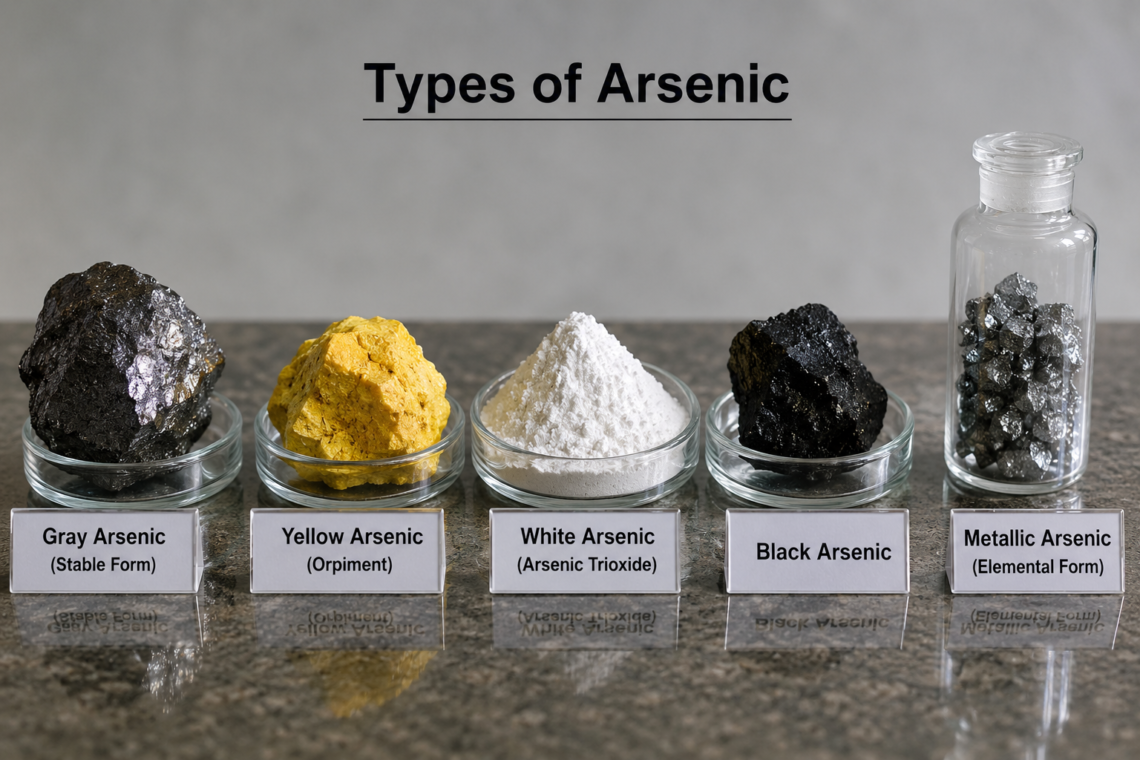
Unlike many elements, arsenic appears in several allotropes. Hence scientists recognize gray arsenic, yellow arsenic, and black arsenic as major forms.
- Gray arsenic is the most stable form.
- Yellow arsenic is less stable and highly reactive.
- Black arsenic has a crystal structure similar to black phosphorus.
- Metallic arsenic is often associated with the gray form.
- Elemental arsenic can exist under specific environmental conditions.
Furthermore, at room temperature, gray arsenic exists in a solid state and displays metallic characteristics.
The Atomic Structure of Arsenic Is Unique
Among the most intriguing facts about arsenic is its atomic structure. Every arsenic atom contains 33 protons, which is why its atomic number is 33. Scientists study arsenic atoms extensively because their behavior helps explain how arsenic reacts with other substances.
The electron configuration of arsenic is:
[Ar] 3d¹⁰ 4s² 4p³
As a result, arsenic has five electrons in its outer shell, allowing it to form a variety of chemical bonds and compounds. Consequently, arsenic can exist in several oxidation states, most commonly -3, +3, and +5.
Consequently these oxidation states play a major role in determining the toxicity and behavior of arsenic compounds in the environment and living organisms.
Arsenic Has Distinct Physical Properties
Another of the lesser-known facts about arsenic involves its physical characteristics.
| Property | Value |
|---|---|
| Atomic Number | 33 |
| Chemical Symbol | As |
| State at Room Temperature | Solid |
| Category | Metalloid |
| Melting Point | Approximately 817°C (under pressure) |
| Common Stable Form | Gray Arsenic |
Furthermore, arsenic does not behave exactly like a metal or a nonmetal. Instead, it occupies a middle ground, which is why scientists classify it as a metalloid.
Facts About Arsenic Throughout History

Arsenic Has Been Known Since Ancient Times
Many fascinating facts about arsenic come from history. Evidence suggests that people were using arsenic-containing minerals in ancient times for pigments, medicines, and decorative purposes.
Additionally, ancient civilizations extracted colorful arsenic minerals for artistic and ceremonial applications. The bright yellow mineral known as yellow orpiment was especially prized.
Albertus Magnus Helped Advance Arsenic Knowledge
One of the most historically significant facts about arsenic involves Albertus Magnus, the famous German philosopher, theologian, and scientist.
During the 13th century, Albertus Magnus reportedly isolated arsenic in a relatively pure form, making him one of the earliest scholars associated with the scientific study of the element.
Consequently, his work helped establish a foundation for later developments in chemistry and metallurgy.
Arsenic Earned the Title “King of Poisons”
Perhaps the most famous of all facts about arsenic is its nickname: the King of Poisons.
Throughout history, arsenic became notorious because:
- It was readily available.
- It was difficult to detect.
- Often it had little taste or odor.
- Symptoms could resemble natural illnesses.
Therefore, arsenic became associated with political intrigue, inheritance disputes, and criminal investigations.
The Victorian Era Saw Widespread Arsenic Use
During the Victorian era, arsenic appeared in surprising places.
For example:
- Wallpapers
- Cosmetics
- Medicines
- Fabrics
- Paints
Unfortunately, people were often unaware of the dangers associated with prolonged exposure. As a result, many individuals unknowingly experienced health problems linked to arsenic-containing products.
If it’s not too much trouble, I’d recommend reading this article The Best 16 Interesting Facts about Palladium Revealed! It could add some valuable context to our discussion.
Facts About Arsenic in Nature
Arsenic Is Found Throughout the Earth’s Crust
One of the essential facts about arsenic is that it occurs naturally in the earth’s crust.
Arsenic-bearing minerals gradually release arsenic through:
- Weathering
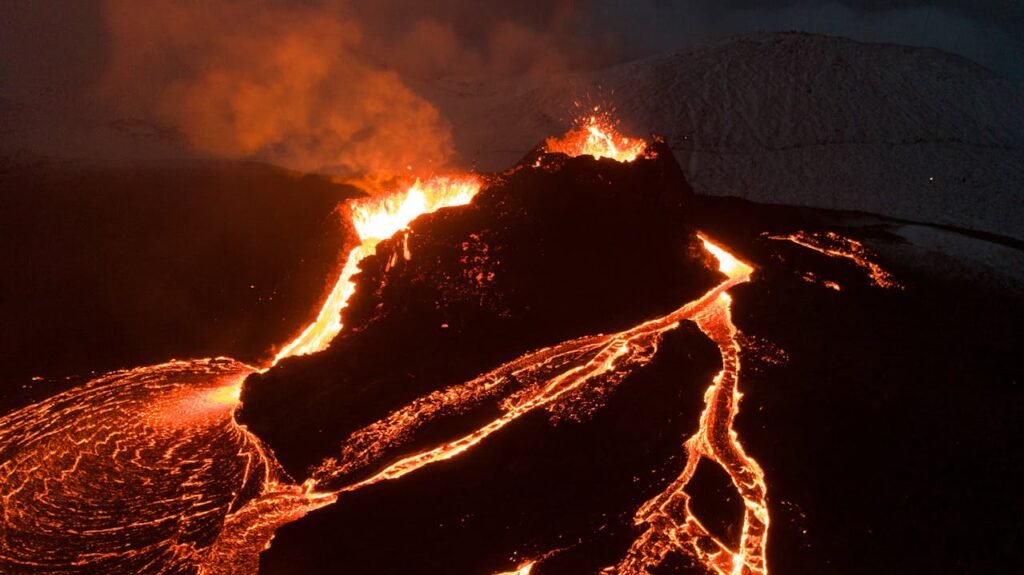
- Volcanic activity
- Geological erosion
- Groundwater interactions
Consequently, arsenic can enter rivers, lakes, and underground water supplies without any human involvement.
Natural Sources Contribute to Environmental Arsenic
Many people assume arsenic contamination is entirely caused by industry. However, one of the important facts about arsenic is that natural sources account for significant environmental concentrations.
These natural sources include:
- Volcanic eruptions
- Rock formations
- Mineral deposits
- Geothermal activity
As a result, some regions naturally contain higher levels of arsenic than others.
Water Is Often the Most Common Source of Arsenic Exposure
Globally, the most common source of arsenic exposure is contaminated drinking water.
When groundwater passes through arsenic-rich geological formations, arsenic dissolves into the water. Consequently, residents using untreated groundwater may consume elevated levels for many years.
This issue is especially important for households relying on private wells, which may not receive the same routine testing as municipal systems.
Arsenic Can Accumulate in Water Supplies
Another critical entry among the many facts about arsenic is its ability to accumulate in water supplies.
In some regions:
- Geological conditions naturally elevate arsenic concentrations.
- Mining activities increase contamination.
- Agricultural runoff contributes additional arsenic.
Therefore, monitoring water quality remains a major public health priority.
Facts About Arsenic and Human Activities

Industrial Processes Can Release Arsenic
While natural sources are significant, human activities also contribute to environmental contamination.
Several industrial processes can release arsenic into the environment, including:
- Mining operations
- Metal smelting
- Coal combustion
- Manufacturing activities
Consequently, communities near industrial sites may face elevated risks of exposure.
Agriculture Historically Relied on Arsenic Compounds
Among the more surprising facts about arsenic is its extensive agricultural history.
Historically, farmers used:
- Lead arsenate
- Calcium arsenate
- Arsenic acid
- Arsenic pentoxide
These compounds served as pesticides and crop protectants.
However, because of safety concerns and environmental persistence, many arsenic-based agricultural products have been restricted or discontinued.
Arsenic Was Once Used as a Wood Preservative
For decades, arsenic compounds served as a wood preservative.
Pressure-treated lumber often contained arsenic-based chemicals to protect against:
- Rot
- Fungi
- Insects
Although these products were effective, concerns regarding human health eventually led to reduced residential use in many countries.
Animal Feed Historically Contained Arsenic Additives
Another notable entry among the many facts about arsenic is that certain arsenic compounds were once added to animal feed.
These additives were intended to:
- Promote growth
- Improve feed efficiency
- Control disease
However, regulatory agencies later reassessed these uses due to concerns about food safety and arsenic residues.
Facts About Arsenic Compounds
Inorganic Arsenic Compounds Are Generally More Dangerous
When discussing facts about arsenic, it is important to distinguish between different chemical forms.
Scientists divide arsenic compounds into two broad categories:
- Inorganic arsenic compounds
- Organic compounds
Generally, inorganic arsenic compounds pose a greater risk to human health than most organic forms of arsenic.
For this reason, researchers frequently measure levels of inorganic arsenic in food and water.
White Arsenic Is One of the Most Toxic Forms
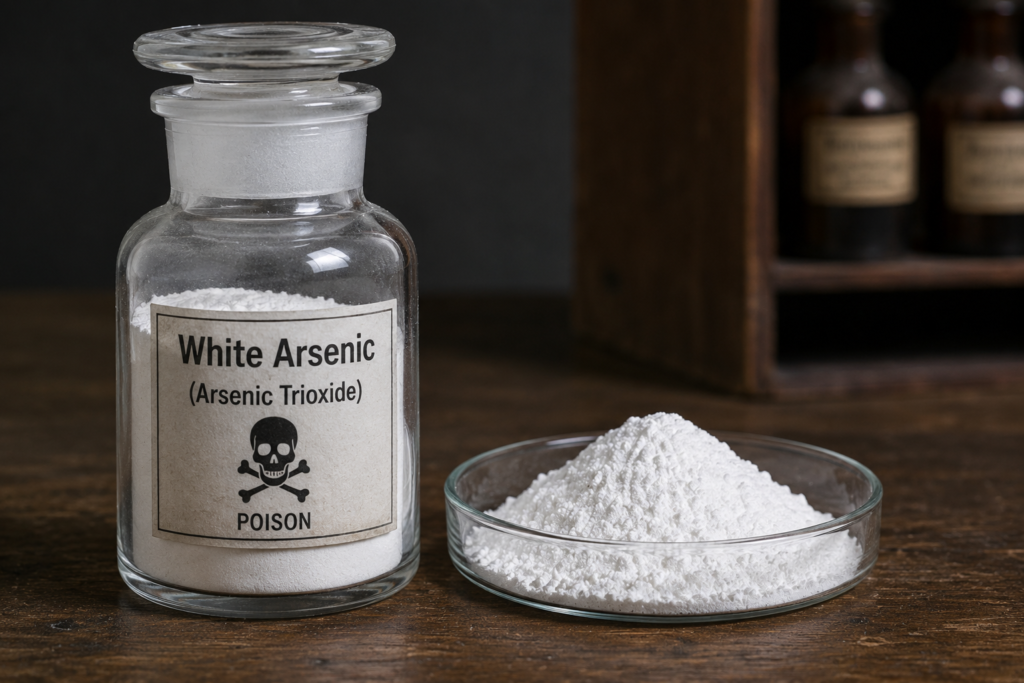
White arsenic, also known as arsenic trioxide, has played a significant role in both medicine and toxicology.
Arsenic trioxide is:
- Highly toxic
- Colorless or white
- Historically associated with poisoning cases
Nevertheless, modern medicine has found carefully controlled uses for this compound.
Arsenic Trioxide Has Medical Applications
Interestingly, not all facts about arsenic are negative.
Today, arsenic trioxide is used in certain forms of cancer treatment, particularly for specific blood cancers.
Because dosage and administration are carefully controlled, physicians can harness its therapeutic effects while minimizing risks.
Organic Forms of Arsenic Are Usually Less Harmful
Among the most important facts about arsenic is the distinction between toxic and less-toxic forms.
Many seafood products contain organic compounds known as organic forms of arsenic. Generally, these forms are processed differently by the body and are considered less harmful than inorganic arsenic.
However, scientists continue to study all arsenic compounds to better understand their long-term effects on human health.
Facts About Arsenic Poisoning and Health Effects

Arsenic Poisoning Can Occur Through Multiple Exposure Routes
One of the most serious facts about arsenic involves arsenic poisoning.
People may experience poisoning through:
- Contaminated drinking water
- Polluted food sources
- Occupational exposure
- Environmental contamination
- Accidental ingestion
The severity depends on the amount consumed and the duration of exposure.
High Doses Can Cause Immediate Health Emergencies
Exposure to high doses of arsenic can create severe medical emergencies.
Symptoms may include:
- Nausea
- Vomiting
- Severe abdominal pain
- Diarrhea
- Confusion
- Shock
Consequently, rapid medical treatment is critical when significant arsenic exposure is suspected.
Long-Term Exposure Creates Serious Health Risks
Many experts consider chronic exposure one of the most concerning facts about arsenic.
Long-term exposure to arsenic-contaminated water or food may increase the risk of:
- Cardiovascular disease
- Diabetes
- Developmental problems
- Neurological disorders
- Various cancers
Because symptoms often develop slowly, individuals may not realize they are being exposed for years.
The Nervous System Can Be Affected
Research shows that chronic arsenic exposure may damage the nervous system.
Potential effects include:
- Numbness in hands and feet
- Tingling sensations
- Muscle weakness
- Reduced coordination
Therefore, reducing unnecessary exposure is important for long-term wellness.
Young Children Face Greater Risks
One of the most concerning facts about arsenic is its potential impact on young children.
Because children are still developing, they may be more vulnerable to toxic substances.
Studies suggest exposure during:
- Early life
- Early childhood
- Prenatal development
may contribute to learning difficulties and other developmental concerns.
Consequently, protecting children from contaminated water and food remains a major public health objective.
Facts About Arsenic and Cancer Risks

Arsenic Is Linked to Skin Cancer
Among the most widely studied facts about arsenic is its association with skin cancer.
Long-term consumption of contaminated water has been linked to:
- Skin lesions
- Pigmentation changes
- Thickening of the skin
- Increased skin cancer risk
Therefore, monitoring water quality is essential.
Lung Cancer Risk May Increase
Scientific evidence indicates that prolonged exposure may contribute to lung cancer.
This risk is particularly relevant for individuals exposed through:
- Industrial settings
- Mining operations
- Airborne arsenic particles
As a result, workplace safety standards play an important role in protecting workers.
Epidemiological Studies Continue to Provide Evidence
Numerous epidemiological studies have examined arsenic-related health outcomes.
These investigations consistently demonstrate connections between chronic exposure and several diseases. Consequently, governments worldwide continue to invest in monitoring and prevention programs.
Adverse Health Effects Depend on Dose
One of the most important facts about arsenic is that risk depends heavily on exposure level.
A small amount of arsenic does not automatically cause illness.
However:
- Higher concentrations increase risk.
- Longer exposure increases risk.
- Vulnerable populations may experience greater harm.
Thus, understanding dosage is essential when evaluating potential health concerns.
Facts About Arsenic in Food

Rice Can Contain Arsenic
Many people are surprised to learn that food can be a source of exposure.
Among modern facts about arsenic, the presence of arsenic in rice has received considerable attention.
Rice plants absorb arsenic from:
- Soil
- Irrigation water
- Environmental deposits
As a result, products such as white rice may contain measurable amounts.
Arsenic-Contaminated Soils Affect Crops
Another important entry among the many facts about arsenic involves agriculture.
Crops grown in arsenic-contaminated soils may absorb arsenic through their root systems.
Historical pesticide use, mining activity, and natural geological conditions can contribute to contamination.
Small Amounts of Arsenic Are Common in Foods
Although this may sound alarming, one of the essential facts about arsenic is that small amounts of arsenic occur naturally in many foods.
These include:
- Rice
- Seafood
- Grains
- Fruits
- Vegetables
In most cases, exposure remains below regulatory safety limits.
Facts About Arsenic in Water Resources
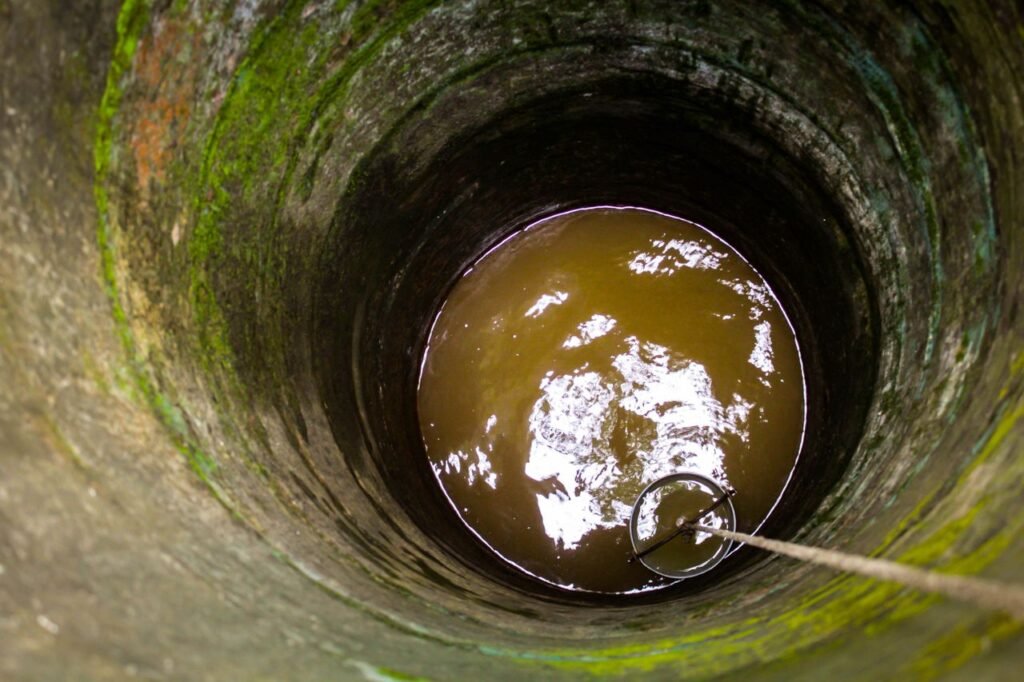
Groundwater Is a Major Concern
Many of the world’s arsenic problems involve underground water.
When arsenic-bearing minerals dissolve naturally, groundwater can accumulate elevated concentrations.
Consequently, millions of people worldwide rely on treatment systems to ensure safe drinking water.
Private Wells Require Regular Testing
One practical lesson from the many facts about arsenic is that owners of private wells should test their water periodically.
Unlike municipal systems, private wells may not receive routine government monitoring.
Therefore, testing helps identify potential problems before they affect health.
The EPA Regulates Arsenic Levels
In the United States, the U.S. Environmental Protection Agency regulates arsenic in public drinking water.
Thus the agency established an EPA standard designed to reduce health risks associated with long-term exposure.
As a result, public water systems must regularly monitor and manage arsenic concentrations.
Water Resources Must Be Protected
Indeed protecting water resources remains one of the most effective ways to reduce arsenic-related health risks.
This includes:
- Monitoring groundwater
- Reducing industrial contamination
- Improving treatment technologies
- Increasing public awareness
Consequently, communities can better safeguard future generations.
Facts About Arsenic in Modern Technology

Gallium Arsenide Powers Advanced Electronics
Not all facts about arsenic focus on toxicity.
Hence, one of arsenic’s most valuable modern applications involves gallium arsenide, a semiconductor material used in:
- Smartphones
- Satellite communications
- Solar panels
- High-speed electronics
Because gallium arsenide performs exceptionally well under demanding conditions, it remains important in advanced technology.
Arsenic Plays a Role in Specialized Manufacturing
Certain industries use carefully controlled amounts of arsenic to improve product performance.
Although safety protocols are strict, these applications demonstrate that arsenic can provide significant technological benefits when handled responsibly.
Cool Facts About Arsenic
Here are some cool facts about arsenic that many people do not know:
- Arsenic is older than humanity itself and formed through cosmic processes.
- It exists naturally in rocks across the globe.
- Gray arsenic is the most stable allotrope.
- Yellow arsenic glows under certain conditions.
- Arsenic has been used in medicine for centuries.
- It helped advance early chemistry research.
- Arsenic compounds were once common household products.
- Modern science uses arsenic in electronics.
- Some cancer treatments utilize arsenic trioxide.
- Arsenic continues to be studied extensively by researchers worldwide.
Frequently Asked Questions: Facts About Arsenic

What is arsenic?
Arsenic is a naturally occurring chemical element with the atomic number 33 that exists in the environment, food, water, and various minerals.
Why is arsenic called the King of Poisons?
Historically, arsenic earned the nickname King of Poisons because it was widely available, difficult to detect, and frequently used in criminal poisonings.
Can arsenic be beneficial?
Yes. Certain compounds, including arsenic trioxide, are used in specialized cancer treatment programs, and arsenic-containing materials contribute to modern electronics.
What is the most common source of arsenic exposure?
Globally, contaminated drinking water is considered the most common source of arsenic exposure.
Does white rice contain arsenic?
Yes. White rice can absorb arsenic from soil and water, although concentrations vary depending on growing conditions and geographic location.
How can I reduce arsenic exposure?
You can reduce arsenic exposure by testing private well water, following food safety recommendations, maintaining a varied diet, and staying informed about local water quality reports.
Are organic forms of arsenic dangerous?
Most organic forms of arsenic are considered less harmful than inorganic arsenic compounds, although researchers continue to study their effects.
Can arsenic cause cancer?
Long-term exposure to high levels of inorganic arsenic has been associated with increased risks of skin cancer, lung cancer, and other serious health conditions.
Conclusion
The many facts about arsenic reveal a fascinating and complex story. Although arsenic is widely known as a dangerous poison, it is also a naturally occurring element with important scientific, medical, industrial, and technological applications. From its discovery in ancient times to its role in modern semiconductors such as gallium arsenide, arsenic continues to influence our world in significant ways.
At the same time, understanding facts about arsenic is essential for protecting human health. Exposure through contaminated water, food, or industrial sources can lead to serious health issues, especially when high levels of arsenic are present over long periods. As a result improved regulations, public awareness, and scientific research continue to reduce risks and improve safety.
Therefore, learning accurate facts about arsenic empowers individuals, communities, and policymakers to make informed decisions about environmental protection, food safety, and public health.
Could you give this article a read when you can? 47 Astonishing Facts About Phosphorus That Will Surprise You. You’ll love it.