Rare Facts About F. Scott Fitzgerald Revealed (Best Guide)
Facts About F. Scott Fitzgerald
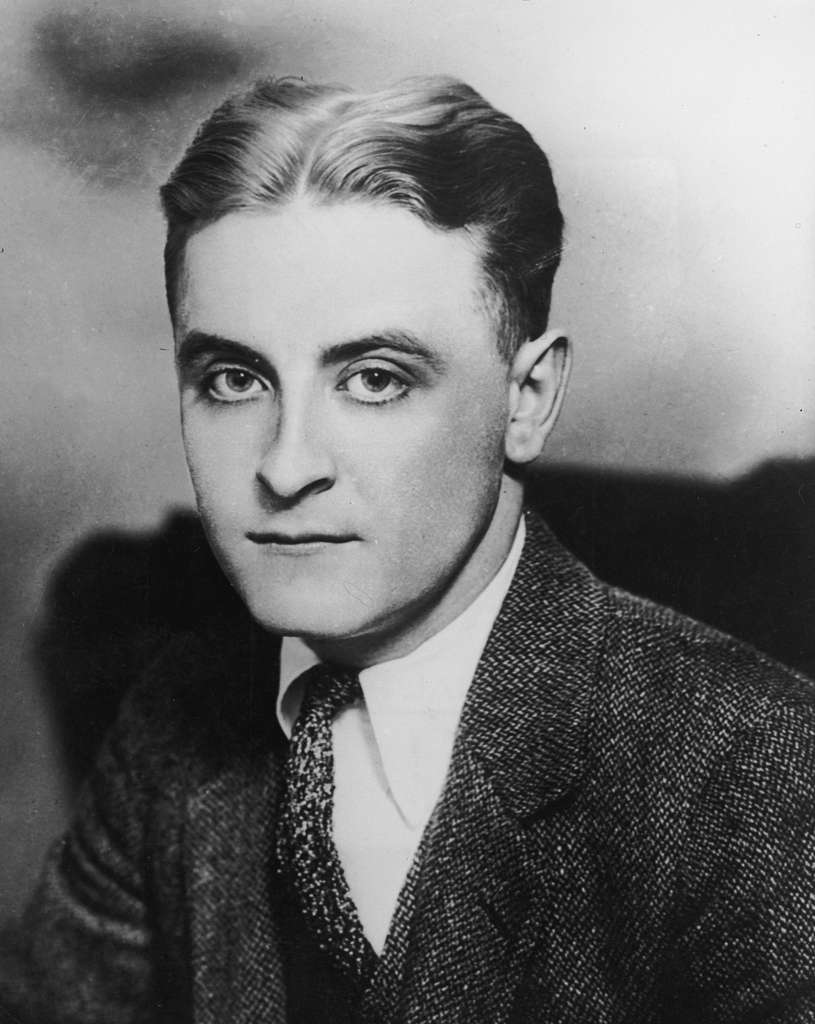
When readers think of the roaring 1920s, shimmering parties, and the elusive American Dream, one name inevitably shines — Francis Scott Key Fitzgerald. Known worldwide as the author of The Great Gatsby, Fitzgerald’s life was as dazzling and tragic as his fiction. These facts about F. Scott Fitzgerald uncover not only the brilliance of his literary career but also the complexity of his personal journey through fame, love, and loss.
Born into a world of contrasts — between wealth and struggle, brilliance and heartbreak — his story is one of ambition, artistry, and enduring influence. Through his novels, short stories, and letters, Fitzgerald captured the soul of an era, becoming a symbol of both its glitter and despair.
As we explore these facts about F. Scott Fitzgerald, a fuller portrait emerges: of a man shaped by New Jersey classrooms, Princeton University, wartime service, and a romance with Zelda Sayre that would define his life and art.
Early Life and Family Background
His Full Name and Patriotic Heritage
Interestingly, one of the most touching facts about F. Scott Fitzgerald is his full name: Francis Scott Key Fitzgerald, named after his distant relative and second cousin, Francis Scott Key, who wrote The Star-Spangled Banner. This connection gave his family immense pride and instilled a deep sense of American identity that would later influence his writings about the American Dream.
The Influence of His Parents
Fitzgerald was born in St. Paul, Minnesota, to Edward Fitzgerald and Mary “Mollie” McQuillan Fitzgerald. His father, from the father’s side, was an unsuccessful businessman from Maryland, while his mother came from a wealthy Irish-Catholic family. These contrasting backgrounds helped shape the class-consciousness found in Fitzgerald’s works.
Moreover, Edward Fitzgerald’s frequent job losses and financial problems profoundly affected young Scott. Consequently, his understanding of social insecurity became a recurring theme in novels like The Great Gatsby.
Education and Early Writing Years
Catholic School Foundations
Before achieving literary fame, Fitzgerald attended Catholic schools, including St. Paul Academy and Newman School in New Jersey. At St. Paul Academy, he wrote for the school newspaper, where his early talent for storytelling began to bloom.
At the Newman School, a key mentor, Father Sigourney Fay, encouraged his writing ambitions and later became one of the earliest believers in his talent. This faith in Fitzgerald’s potential proved prophetic.
Princeton University: A Crucible of Creativity
While at Princeton University, Fitzgerald joined several literary clubs and wrote for campus publications, but he struggled academically. Due to excessive socializing and writing, he was eventually placed on academic probation. Nevertheless, his time at Princeton introduced him to Edmund Wilson and John Peale Bishop, both of whom became lifelong Fitzgerald’s friends and literary influences.
It was also during this period that he began drafting The Romantic Egotist, a precursor to his first novel, This Side of Paradise.
World War I and the Birth of a Writer
Becoming a Second Lieutenant
Another one of the notable facts about F. Scott Fitzgerald is his military service. In 1917, during World War I, he enlisted in the U.S. Army and was commissioned as a second lieutenant. Though he never saw combat, his experiences deeply impacted his later writing.
While stationed at Camp Sheridan in Montgomery, Alabama, he met eighteen-year-old Zelda Sayre, the daughter of an Alabama Supreme Court judge. Their passionate romance became one of the most famous love stories in American literary history.
Love, Rejection, and the First Novel
When the war ended, Fitzgerald returned home determined to prove his worth to Zelda, who had temporarily broken off their engagement due to his lack of financial security. Consequently, he rewrote The Romantic Egotist into This Side of Paradise, his first novel, published in 1920. The book’s instant success made him an overnight celebrity at just 24.
With newfound fame, he married Zelda Fitzgerald, and together they became the “prince and princess of their generation.” Their union, however, was as turbulent as it was glamorous.
The Jazz Age and Literary Fame
The Rise of the Jazz Age Icon
Because of the wild success of This Side of Paradise, Fitzgerald became the voice of the Jazz Age — a term he himself coined. Among the most captivating facts about F. Scott Fitzgerald is how he earned a living writing short stories for magazines like the Saturday Evening Post, which paid generously for his tales of youthful ambition and modern love.
He also published Tales of the Jazz Age, featuring classics like The Curious Case of Benjamin Button, which was later adapted into a Hollywood film starring Brad Pitt.
The Great Gatsby and the Height of Fame
The Creation of a Masterpiece
Among the most defining facts about F. Scott Fitzgerald is his authorship of The Great Gatsby, considered by many literary scholars as the quintessential Great American Novel. Published in 1925, the book drew from Fitzgerald’s experiences living on Long Island, specifically in Great Neck and West Egg, where he and Zelda Fitzgerald mingled with the wealthy elite.
Significantly, the book explored themes of illusion, love, and the American Dream, capturing the moral decay beneath the glittering façade of the Jazz Age. Nick Carraway, Daisy Buchanan, Jay Gatsby, and Jordan Baker became enduring symbols of ambition and heartbreak in American culture.
Moreover, the title itself evolved from several early drafts — including Trimalchio in West Egg and The Gold-Hatted Gatsby. Although initial reviews were lukewarm, The Great Gatsby eventually became Fitzgerald’s most acclaimed work, with millions recognizing it as a timeless exploration of aspiration and loss.
Inspiration and Real-Life Connections
Interestingly, one of the lesser-known facts about F. Scott Fitzgerald is that many of his characters were inspired by real people. For instance, Max Gerlach, a German-American bootlegger from New York City, is believed to have inspired the mysterious persona of Jay Gatsby. Similarly, socialite Ginevra King, Fitzgerald’s first love, influenced his portrayal of the upper-class women in his novels, especially Daisy Buchanan.
Additionally, Fitzgerald’s fascination with wealth and class often stemmed from his own outsider status — he was a man born on the edge of privilege, forever yearning for inclusion.
Hollywood and The Decline of a Dream
Struggles with Success and Mental Illness
Following the success of The Great Gatsby, Fitzgerald’s life began to unravel. Another striking one of the facts about F. Scott Fitzgerald involves his and Zelda’s descent into emotional turmoil. Zelda suffered a severe mental breakdown, while Fitzgerald battled financial problems and alcoholism.
During the Great Depression, interest in his books waned, and he found himself writing short stories primarily for money. While his earlier tales had celebrated youth and glamour, his later ones reflected disillusionment and regret.
Despite this, Fitzgerald’s talent remained undeniable. His stories for the Saturday Evening Post continued to enchant readers, especially pieces like Babylon Revisited, which mirrored his own sense of loss.
Move to Hollywood and Sheilah Graham
In the late 1930s, Fitzgerald relocated to Hollywood to work as a screenwriter. Consequently, he developed a relationship with Sheilah Graham, a British columnist who became his companion during his final years. Though his Hollywood scripts rarely found success, they helped him financially during this difficult time.
His final novel, The Love of the Last Tycoon, remained unfinished at the time of his death. Later published posthumously, it offered a poignant glimpse into the heart of a man who had loved and lost nearly everything.
The Tragic End of a Literary Icon
A Life Cut Short
Tragically, one of the most heartbreaking facts about F. Scott Fitzgerald is his untimely death. On December 21, 1940, while living in Hollywood, he suffered a heart attack and died at the age of 44. At the time of his death, many considered him a forgotten writer — his books were out of print, and his reputation had faded.
However, history would soon prove otherwise. Following World War II, critics rediscovered his work, recognizing him as one of the greatest voices in American literature.
Zelda Fitzgerald’s Fate
Sadly, Zelda Fitzgerald met her own tragic end in 1948, perishing in a fire at a hospital in North Carolina, where she was being treated for mental illness. Together, their lives embodied both the brilliance and fragility of the Jazz Age dream.
Their daughter, Frances Scott “Scottie” Fitzgerald, or daughter Scottie, went on to become a journalist and writer herself, preserving her parents’ literary legacy.
The Legacy of F. Scott Fitzgerald
Rediscovery and Lasting Influence
Decades after his death, Fitzgerald’s novels began to receive the recognition they deserved. Scholars, critics, and readers around the United States and beyond celebrated his ability to portray universal emotions — longing, ambition, and the ache of time passing.
Furthermore, the film adaptations of The Great Gatsby, including the 1974 version starring Robert Redford and the 2013 adaptation with Leonardo DiCaprio, reintroduced his story to new generations. These portrayals revived fascination with Gatsby’s glittering world, Ralph Lauren’s fashion designs inspired by the film, and the enduring appeal of Fitzgerald’s dreamlike prose.
Additionally, modern culture continues to draw inspiration from his works. From fashion brands to movies and academic research, facts about F. Scott Fitzgerald still resonate powerfully in today’s world.
Snippet (Verified Source)
One verified fact about F. Scott Fitzgerald:
He was named after his second cousin, Francis Scott Key, who wrote The Star-Spangled Banner — the national anthem of the United States.
(Source: Library of Congress)
Friendships and Literary Circles

Fitzgerald and Ernest Hemingway
Another fascinating one among the facts about F. Scott Fitzgerald involves his complicated friendship with Ernest Hemingway. The two first met in Paris during the 1920s, at the height of the “Lost Generation.” While Fitzgerald admired Hemingway’s raw, masculine prose, Hemingway often viewed Fitzgerald as overly romantic and indulgent.
Nevertheless, they respected each other’s artistry. Fitzgerald helped Hemingway connect with influential publisher Maxwell Perkins at Scribner’s, which led to the publication of The Sun Also Rises. However, their friendship deteriorated over time, largely due to Fitzgerald’s excessive drinking and Zelda Fitzgerald’s disdain for Hemingway.
Ultimately, Hemingway’s portrayal of Fitzgerald in A Moveable Feast painted a bittersweet picture of a brilliant yet troubled man. Still, both writers remain cornerstones of American literature, forever intertwined by their shared vision of human fragility and hope.
If it’s not too much trouble, I’d recommend reading about Ernest Hemingway and Cuba. It could add some valuable context to our discussion.
Influence of T. S. Eliot and Henry James
It should also be noted that T. S. Eliot and Henry James influenced Fitzgerald’s style. He admired their mastery of language and depth of psychological realism. Therefore, it’s no coincidence that The Great Gatsby combines lush poetic imagery with psychological insight, echoing both authors’ techniques.
Moreover, Fitzgerald’s sensitivity to rhythm and symbolism made his prose sing with elegance and emotion — qualities that continue to set him apart from his contemporaries.
Themes in Fitzgerald’s Works
The American Dream: Beauty and Decay
At the heart of all facts about F. Scott Fitzgerald lies one recurring theme — the pursuit and corruption of the American Dream. His novels depict a world where material success often leads to moral decline. The Great Gatsby, for instance, portrays wealth as both alluring and destructive.
Gatsby’s endless longing for Daisy symbolizes humanity’s desire for an ideal that always remains out of reach. Moreover, Fitzgerald’s own life mirrored this tension — between artistic ambition and worldly indulgence.
Through characters like Jay Gatsby, Fitzgerald captured the universal human desire to reinvent oneself, even at the cost of authenticity. Therefore, his works endure not merely as social commentaries but as emotional testaments to the price of dreaming too big.
Love, Illusion, and the Modern Soul
Additionally, facts about F. Scott Fitzgerald reveal his obsession with love’s duality — its beauty and its ruin. His relationship with wife Zelda Sayre deeply informed his fiction. Their passionate yet chaotic marriage inspired many of his female characters, from the charming Daisy Buchanan to the fragile heroines of his short stories.
In his narratives, love often begins with fascination and ends in disillusionment. This emotional arc mirrored the real Fitzgeralds’ journey from youthful romance to despair, intensified by Zelda’s mental illness and his alcoholism.
Notable Works Beyond The Great Gatsby
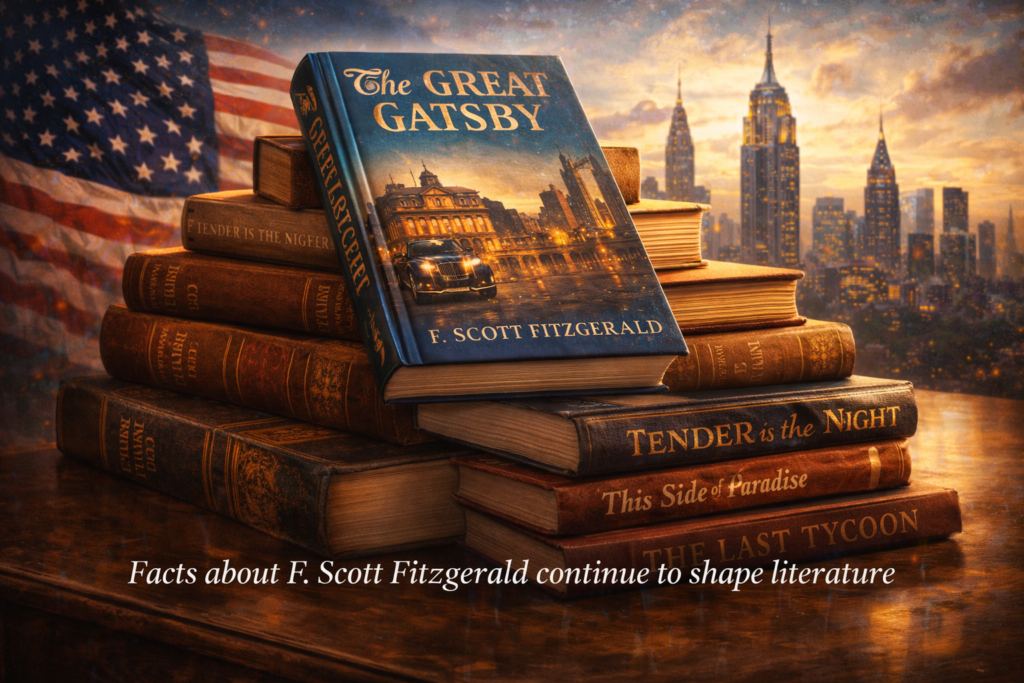
This Side of Paradise – His First Novel
As mentioned earlier, This Side of Paradise was Fitzgerald’s first novel and the work that brought him instant success. It captured post-World War I youth culture, focusing on the restless ambitions of college-educated “poor boys.”
The protagonist, Amory Blaine, mirrored Fitzgerald himself — a Princeton University student navigating love and disillusionment. The novel’s exploration of self-identity made it a defining voice for the Jazz Age generation.
The Beautiful and Damned – The Second Novel
His second novel, The Beautiful and Damned, delved deeper into themes of ambition and decadence. Inspired by his marriage, it follows Anthony and Gloria Patch, whose pursuit of wealth leads to emptiness.
While critics found the book flawed, it remains a rich reflection of Fitzgerald’s growing awareness of fame’s toll. Many readers view it as a bridge between youthful optimism and the tragic wisdom of The Great Gatsby.
Tender Is the Night – The Next Novel
Later, Tender Is the Night explored emotional collapse and the illusion of control. Set on the French Riviera, it portrayed psychiatrist Dick Diver’s downfall and was partly inspired by Zelda Fitzgerald’s institutionalization.
Although it was less successful commercially, modern critics now regard it as one of Fitzgerald’s most mature and psychologically complex works.
Hidden Gems and Shorter Works
Tales of the Jazz Age and Short Story Mastery
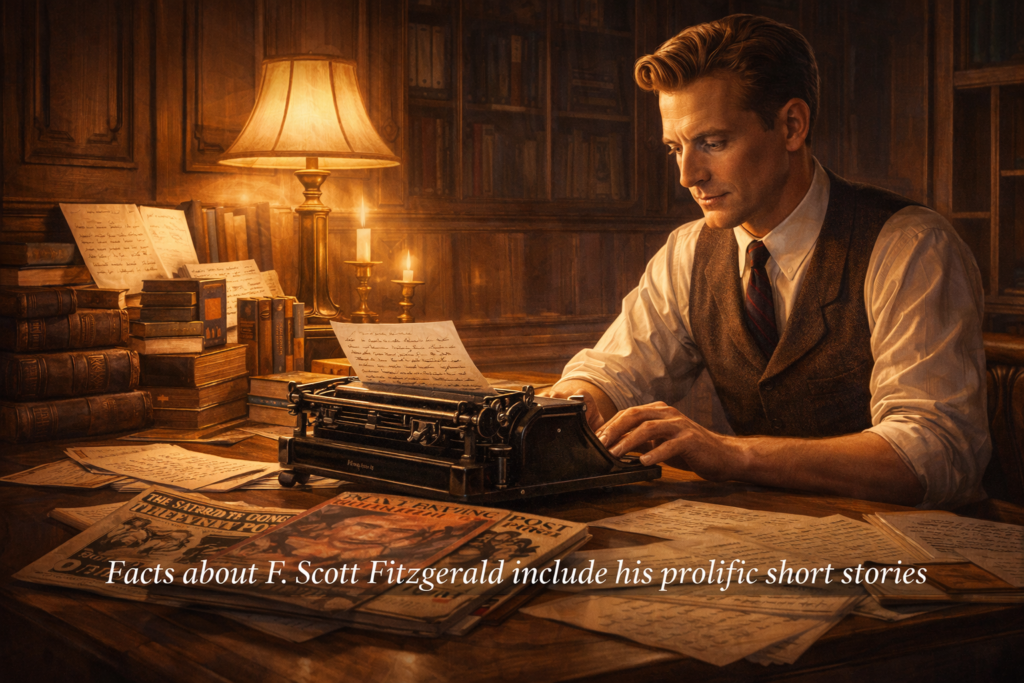
In addition to his novels, Fitzgerald produced over 160 short stories, many published in the Saturday Evening Post. Among these, The Curious Case of Benjamin Button stands out for its imagination and emotional depth.
Other gems like The Diamond as Big as the Ritz and Winter Dreams demonstrate his gift for blending fantasy and realism. Indeed, his short story craftsmanship helped shape modern magazine fiction, influencing generations of writers to come.
Unfinished Dreams – The Final Novel
His final novel, The Love of the Last Tycoon, offers a poignant reflection on Hollywood ambition. Though incomplete, it showcases Fitzgerald’s evolution as a writer — more introspective, mature, and reflective.
Critics view it as a window into his final thoughts on art, love, and failure. Consequently, this unfinished work adds depth to the tragic mythology surrounding his name.
Cultural Impact and Popular Adaptations
The Great Gatsby in Film and Fashion
Over time, The Great Gatsby has been adapted into several films, each offering a new lens on Fitzgerald’s masterpiece. The 1974 adaptation featuring Robert Redford embodied classic Hollywood elegance, while Baz Luhrmann’s 2013 version revitalized Gatsby with modern energy and Ralph Lauren’s iconic costumes.
These adaptations reintroduced Gatsby’s mystique to new audiences, reaffirming Fitzgerald’s role as a cultural cornerstone.
From Great Neck to Oheka Castle
Interestingly, facts about F. Scott Fitzgerald suggest that the opulent Oheka Castle on Long Island inspired parts of Gatsby’s mansion. Living in Great Neck, Fitzgerald observed the glittering parties and excess that mirrored his fictional world.
Through his detailed portrayal of high society, he immortalized the Jazz Age’s contradictions — wealth and emptiness, beauty and decay.
Philosophy, Reflection, and the Human Condition

Fitzgerald’s View of Success and Failure
Among the most poignant facts about F. Scott Fitzgerald is his evolving view of success and failure. Though he once lived as a symbol of glamour, he later recognized the illusion of wealth and fame. His writings reveal a deep empathy for those who strive for greatness only to be defeated by their own dreams.
Eventually, Fitzgerald came to understand that success without meaning leads to emptiness. His letters to friends, like Edmund Wilson, show a man painfully aware of his contradictions — a writer chasing beauty while haunted by despair.
Still, his ability to find poetry in pain became his greatest strength. Through his short stories and novels, he turned heartbreak into art, leaving behind lessons on resilience and human vulnerability.
Fitzgerald’s Relationship with Faith and Morality
Raised in Catholic schools, Fitzgerald carried a lifelong sense of guilt and introspection. This spiritual background often surfaced in his work, where moral decay contrasts with an enduring yearning for redemption.
For instance, Nick Carraway in The Great Gatsby serves as the story’s moral compass, witnessing both the splendor and rot of Gatsby’s world. Through such characters, Fitzgerald explored what it means to remain honest in a society obsessed with appearances.
Influence on Modern Writers and American Literature
Enduring Relevance in the 21st Century
Without question, one of the most striking facts about F. Scott Fitzgerald is that his work feels as fresh today as it did a century ago. Scholars and students still study him in classrooms across the United States, analyzing how his stories speak to ambition, youth, and disillusionment.
Moreover, his influence extends far beyond literature. Filmmakers, musicians, and designers continue to reinterpret his vision of the Jazz Age. The themes of longing and reinvention remain timeless, especially in an era dominated by social media and image.
Tributes from Literary Scholars
Literary scholars like Matthew Bruccoli and Arthur Mizener have written extensively about Fitzgerald’s craft. They describe his prose as “elegant yet devastating,” capturing both beauty and tragedy in a single sentence.
Furthermore, his precision with words has inspired countless authors who came after him, from J. D. Salinger to modern novelists exploring fame, identity, and illusion. His reputation, once tarnished by his personal struggles, now stands as a testament to the enduring power of art.
Life Lessons from Fitzgerald’s Story
1. Dreams Require Discipline
Even though Fitzgerald was a dreamer, his journey shows that talent alone is not enough. He revised obsessively, studied Henry James, and wrote every day — a reminder that dedication turns creativity into mastery.
2. Love Is Both Beautiful and Fragile
His marriage to Zelda Fitzgerald remains one of literature’s most famous romances. Yet, it also illustrates the toll of passion unchecked by understanding. Through his life, Fitzgerald taught that love can inspire genius and madness in equal measure.
3. Wealth Cannot Buy Fulfillment
Throughout his career, he portrayed money as both seductive and destructive. The Great Gatsby remains a cautionary tale for anyone who confuses material success with happiness.
4. Failure Can Be Transformative
Ultimately, Fitzgerald’s later years reveal that even broken dreams can create beauty. His unfinished works and letters display humility and wisdom gained through loss.
Frequently Asked Questions About F. Scott Fitzgerald
What inspired F. Scott Fitzgerald to write The Great Gatsby?
His experiences living on Long Island, mingling with wealthy elites in Great Neck and New York City, inspired the novel. He observed how privilege often masked moral emptiness, leading him to explore the dark side of the American Dream.
Who was Zelda Fitzgerald and how did she influence his writing?
Zelda Fitzgerald, the daughter of an Alabama Supreme Court judge, inspired many of his heroines. Their passionate, chaotic marriage shaped his themes of beauty, ambition, and destruction.
How did Fitzgerald’s education influence his career?
His time at Princeton University, despite being cut short by academic probation, exposed him to elite society and sharpened his literary skills. Mentors like Father Sigourney Fay at the Newman School further encouraged his ambition.
Did Fitzgerald serve in the military?
Yes, he joined the army during World War I as a second lieutenant. Although he never fought in battle, his service at Camp Sheridan changed his life — it was where he met Zelda.
What caused F. Scott Fitzgerald’s death?
He died from a heart attack in 1940 while living in Hollywood. His health had declined due to years of stress, alcoholism, and overwork.
Why is Fitzgerald considered one of the greatest American writers?
Because his works — from This Side of Paradise to The Great Gatsby — capture universal emotions with lyrical beauty. His portrayal of ambition, love, and illusion continues to define American literature.
Legacy and Final Thoughts
Fitzgerald’s Spirit Lives On
Ultimately, the most powerful of all facts about F. Scott Fitzgerald is that his voice continues to echo through time. His words, once dismissed as fleeting reflections of the Jazz Age, have become immortal expressions of the human heart.
Even decades after the Great Depression and his passing, readers find themselves drawn to his bittersweet portrayals of hope, loss, and redemption. Through his vision, we glimpse our own desires — the longing to be seen, to be loved, to matter.
A Timeless Reminder
At his core, Fitzgerald was not merely chronicling the wealthy — he was chronicling all of us. His writing reminds us that behind every glittering dream lies a fragile human truth: the need to belong, to believe, and to dream again.
For this reason, facts about F. Scott Fitzgerald will forever inspire dreamers, writers, and thinkers around the world. His life remains a testament to art’s power to outlive its creator, shining long after the lights of the Jazz Age have faded.
External Source:
To explore Fitzgerald’s manuscripts and letters, visit the F. Scott Fitzgerald Collection at Princeton University Library.
Final Reflections on the Life and Work of F. Scott Fitzgerald

The Fragility Behind the Brilliance
Among the most poignant facts about F. Scott Fitzgerald is the contrast between his glittering public persona and his private pain. Outwardly, he seemed to embody the success and charm of the Jazz Age — the sophisticated novelist whose words captured the rhythm of the 1920s. Yet privately, he battled insecurity, rejection, and the relentless pressure to sustain his fame.
In letters to his editor, Maxwell Perkins, Fitzgerald admitted his fear of fading into obscurity. His confessions reveal a man driven not by vanity, but by the desperate need to prove his worth as an artist. Ironically, this same sensitivity that tormented him also made his writing profoundly human.
Consequently, his works endure because they expose the fragility of ambition. Every story — from The Beautiful and Damned to Tender Is the Night — unveils the cost of chasing perfection in an imperfect world.
The Enduring Power of The Great Gatsby
Among all facts about F. Scott Fitzgerald, one stands tallest: The Great Gatsby continues to define him. Its lyrical language and tragic beauty speak across generations, and every reread reveals something new.
The novel’s exploration of Jay Gatsby’s impossible dream, mirrored by Fitzgerald’s own pursuit of artistic greatness, remains a timeless allegory for human longing. Although Gatsby’s life ends in tragedy, his dream — and Fitzgerald’s — endures through the readers who still find meaning in his pursuit.
Moreover, Gatsby’s love for Daisy Buchanan, with all its illusions, reflects the universal truth that we are shaped not only by our dreams but also by what we dare to believe.
Rediscovery After Death
Another remarkable one of the facts about F. Scott Fitzgerald is that his fame was resurrected posthumously. In the 1940s and 1950s, universities began teaching The Great Gatsby, restoring Fitzgerald to his rightful place among the literary greats.
Critics such as Edmund Wilson and Malcolm Cowley worked tirelessly to preserve his legacy, publishing his unfinished manuscripts and correspondence. As a result, readers rediscovered his unmatched ability to blend poetic emotion with sharp social commentary.
Today, his influence extends into music, film, and even modern fashion. From Ralph Lauren’s Gatsby-inspired collections to contemporary films set against Jazz Age backdrops, Fitzgerald’s vision continues to shape modern interpretations of style and aspiration.
The Fitzgerald Family’s Continuing Legacy
The legacy of F. Scott Fitzgerald did not end with his death. His daughter Frances Scott Fitzgerald, affectionately known as Scottie, became a successful writer and journalist, determined to protect her father’s reputation.
Through her efforts, collections of his letters and essays were preserved, offering readers rare insight into his thoughts and struggles. Additionally, her children and grandchildren continued to honor his name, ensuring that future generations could study his life without distortion.
Furthermore, the Fitzgerald Society, formed by literary enthusiasts and academics, continues to organize conferences and maintain archives dedicated to his work, fostering global appreciation for his artistry.
Why F. Scott Fitzgerald Still Matters Today
Undeniably, one of the greatest facts about F. Scott Fitzgerald is that his message still resonates a century later. In an age of ambition and excess, his warnings about materialism, identity, and illusion feel more relevant than ever.
Because his writing reflects the eternal human condition — our hopes, fears, and fragile dreams — readers across eras find solace in his words. As he once wrote, “Show me a hero and I’ll write you a tragedy.” That line alone captures his vision of beauty and despair intertwined.
Even now, his voice reminds us that behind every tragedy lies grace — that to dream, despite inevitable loss, is the truest act of courage.
Conclusion: The Timeless Dreamer
Ultimately, the story of Francis Scott Key Fitzgerald is not just that of a famous novelist; it is the story of the dreamer within all of us. He lived passionately, wrote beautifully, and fell tragically — yet through it all, he never stopped believing in art’s power to redeem life’s pain.
Although he died believing himself a failure, history has crowned him one of America’s greatest voices. His portrayal of love, ambition, and regret continues to echo in classrooms, theaters, and hearts around the world.
Therefore, these enduring facts about F. Scott Fitzgerald serve as both tribute and reminder: genius often walks hand in hand with fragility, and even a life cut short can illuminate centuries.
As his epitaph reads, quoting the closing line of The Great Gatsby:
“So we beat on, boats against the current, borne back ceaselessly into the past.”
And in that eternal motion — between past and present, dream and disillusion — Fitzgerald’s spirit still sails, forever chasing the light.
Final Word
Through his words, F. Scott Fitzgerald offered the world an unfiltered reflection of itself. His understanding of human emotion remains unmatched, his style timeless, and his insight into society eerily prophetic.
In the end, his life stands as both a warning and an inspiration: that even amid heartbreak and loss, art can turn sorrow into immortality.
I’d really appreciate it if you could read this article Facts About Edgar Allen Poe when you have a moment. I think you’ll love it!


